Modals


Modal Verbs | ENGLISH PAGE
Free online tutorial focusing on modal verbs and modal like expressions with interactive modal verb exercises. (Also called modals, helping verbs, or auxiliary verbs.)

Ability
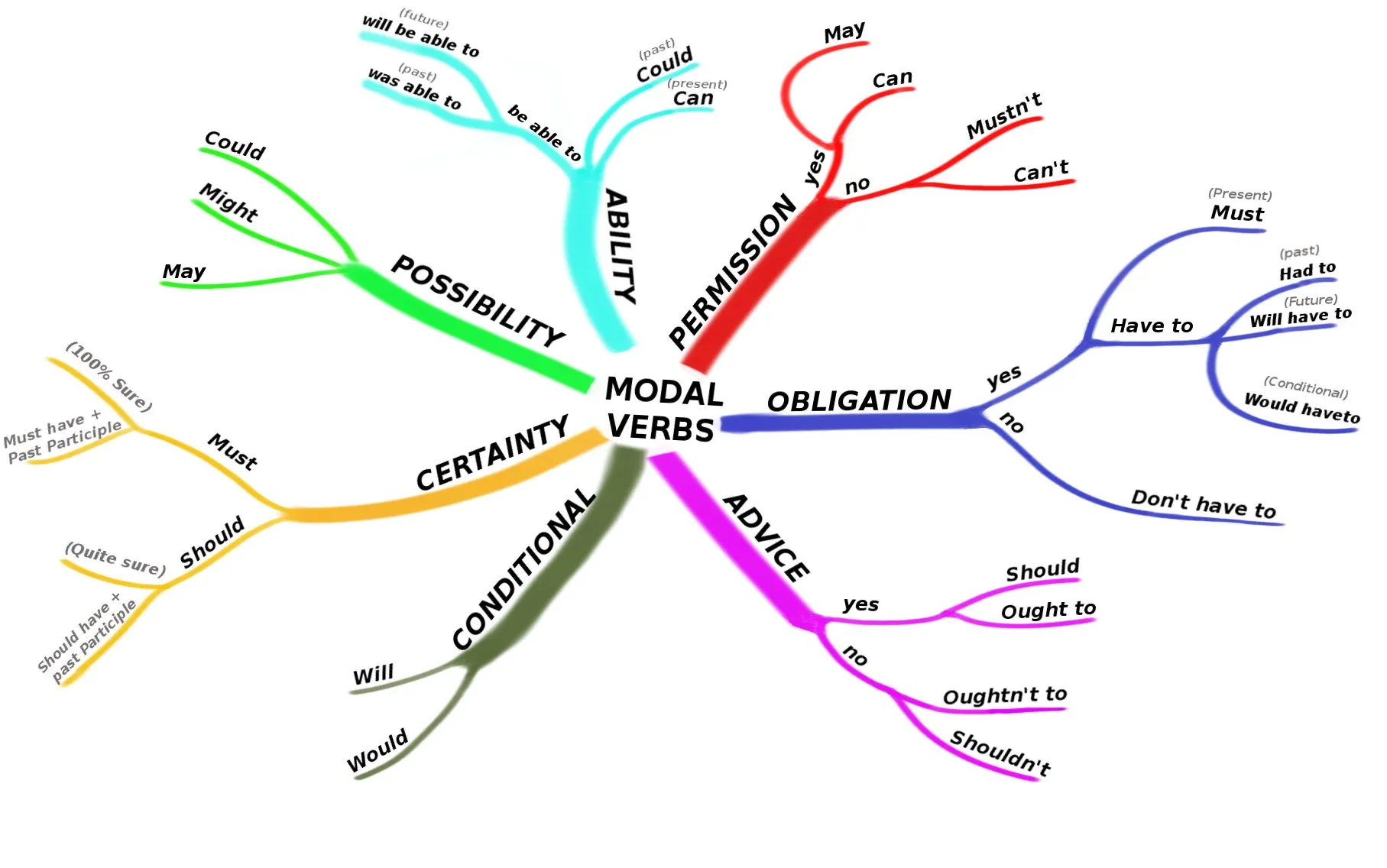
- Can → present ability (I can swim.)
- Could → past ability (I could swim when I was five.)
- Be able to → ability in different tenses (I’ll be able to drive soon.)
- Was / were able to → past specific success (I was able to fix it.)
- Will be able to → future ability (She’ll be able to join us.)
Possibility
- Could → possible (It could happen.)
- Might → less certain possibility (It might rain.)
- May → possible, slightly formal (It may be true.)
Permission
- Can → informal permission (You can leave now.)
- May → formal permission (You may begin.)
- Mustn’t → not allowed (You mustn’t smoke here.)
- Can’t → not allowed / impossible (You can’t park here.)
Obligation
- Must → strong obligation now (You must wear a seatbelt.)
- Have to → obligation / rule (I have to work tomorrow.)
- Had to → past obligation (I had to leave early.)
- Will have to → future obligation (We’ll have to decide soon.)
- Would have to → conditional obligation (You’d have to ask first.)
- Don’t have to → no obligation (You don’t have to come.)
Advice
- Should → advice (You should rest.)
- Ought to → advice, more formal / moral (You ought to apologise.)
- Shouldn’t → negative advice (You shouldn’t worry so much.)
- Oughtn’t to → negative advice, formal (You oughtn’t to lie.)
Certainty / Deduction
- Must → almost certain now (He must be tired.)
- Must have + past participle → almost certain about the past (He must have forgotten.)
- Should → quite sure / expected (They should be home soon.)
- Should have + past participle → expected in the past (They should have arrived by now.)
Conditional
- Will → real future result (If it rains, I’ll stay home.)
- Would → imagined result (If I had time, I would travel.)
Questions
1. ABILITY (can / could / be able to)
- What can you do well, what could you improve, and what do you want to be able to do in the future?
- What can you do better than most people?
- What skills could you improve this year?
- What do you want to be able to do in 5 years?
- Could you fix a car problem by yourself?
- Were you able to do something difficult recently?
2. POSSIBILITY (might / may / could)
- What might happen if people stop using social media?
- Could AI replace your job?
- What might happen in your country in the next 10 years?
- Could your life change completely in one year?
- What might go wrong at a wedding?
3. OBLIGATION (must / have to / don’t have to)
- What must people do to be successful?
- Do you have to work hard to be happy?
- What rules do people have to follow in your job?
- What don’t you have to do anymore as an adult?
- Should children have to follow strict rules?
4. ADVICE (should / shouldn’t / ought to)
- What should people do before getting married?
- What shouldn’t people do in their 20s?
- What should someone do if they feel lost in life?
- Should people take more risks?
5. CONDITIONAL (would / will)
- What would you do if you lost your job?
- What would you do if you had unlimited money?
- Would you move to another country if you had the chance?
- What would happen if people stopped working?
- Would you change your career if you could?
7. PERMISSION (can / may / mustn’t / can’t)
- What should people be allowed to do?
- What shouldn’t be allowed in schools?
- Should people be allowed to own guns?
- What can’t you do in your country?
- What rules mustn’t be broken?