
Fishing for Compliments

Welcome to An English Guide #2. Your weekly invitation to read, learn, reflect and write. You're very welcome to bring your thoughts to a lesson too! You'll find an idiom, a few stories, a quiz and some writing prompts. If you like the article, feel free to subscribe at the top right to get new issues sent straight to your inbox.
This week, we’ll meet an emperor with a big ego, a queen who fished for compliments, and a dog who never needed any. You'll find four ways to fish for something and three ways to milk it, and maybe a few new words to look out for. At the end, there’s a quiz to test what you’ve caught.
In last week’s issue, we explored the origin of the idiom to steal someone’s thunder (to take attention, credit or praise away from someone), and some related ideas. Adam Smith, the father of modern economics, gave us that line: “Man naturally desires, not only to be loved, but to be lovely.”
This week’s idiom is about something similar. It's still about seeking praise, but in a more subtle way.
To fish for compliments.
To fish for is an idiomatic structure in itself, and you can fish for many things - not just fish. You can also fish for octopus.
fish for compliments
To get praise without asking for it.
“I look so tired today,” she posted a glamorous photo of herself on Instagram. She was fishing for compliments.
fish for information
To try to find out something secret, casually.
"Mark kept fishing for information about who’s getting promoted."
fish for sympathy
To try to get pity or reassurance without asking.
"He’s always complaining about his schedule. He’s just fishing for sympathy."
fish for a reaction
To say something provocative to see how people respond.
"Ignore his comment. He’s only fishing for a reaction."
Someone who did not fish for compliments was Napoleon; he hired one of the greatest painters in France to paint his portrait in the most complimentary way.
In May 1800, Napoleon led his army over the Alps, through a high mountain pass called the Great St Bernard. It was a bold move, and he wanted the world to remember it.
"Show me calm, on a fiery horse."
A white horse rearing up on its back legs. A red cloak flying in the wind. Napoleon, cool and confident, pointing to the top of the mountain. Carved into the rocks at his feet are the names of two other great leaders who crossed the Alps before him: Hannibal and Charlemagne. And now, Bonaparte.
Napoleon liked it so much that David ended up painting five versions. They hang in the Château de Malmaison near Paris, Charlottenburg Palace in Berlin, the Belvedere in Vienna and the Palace of Versailles, which has two.
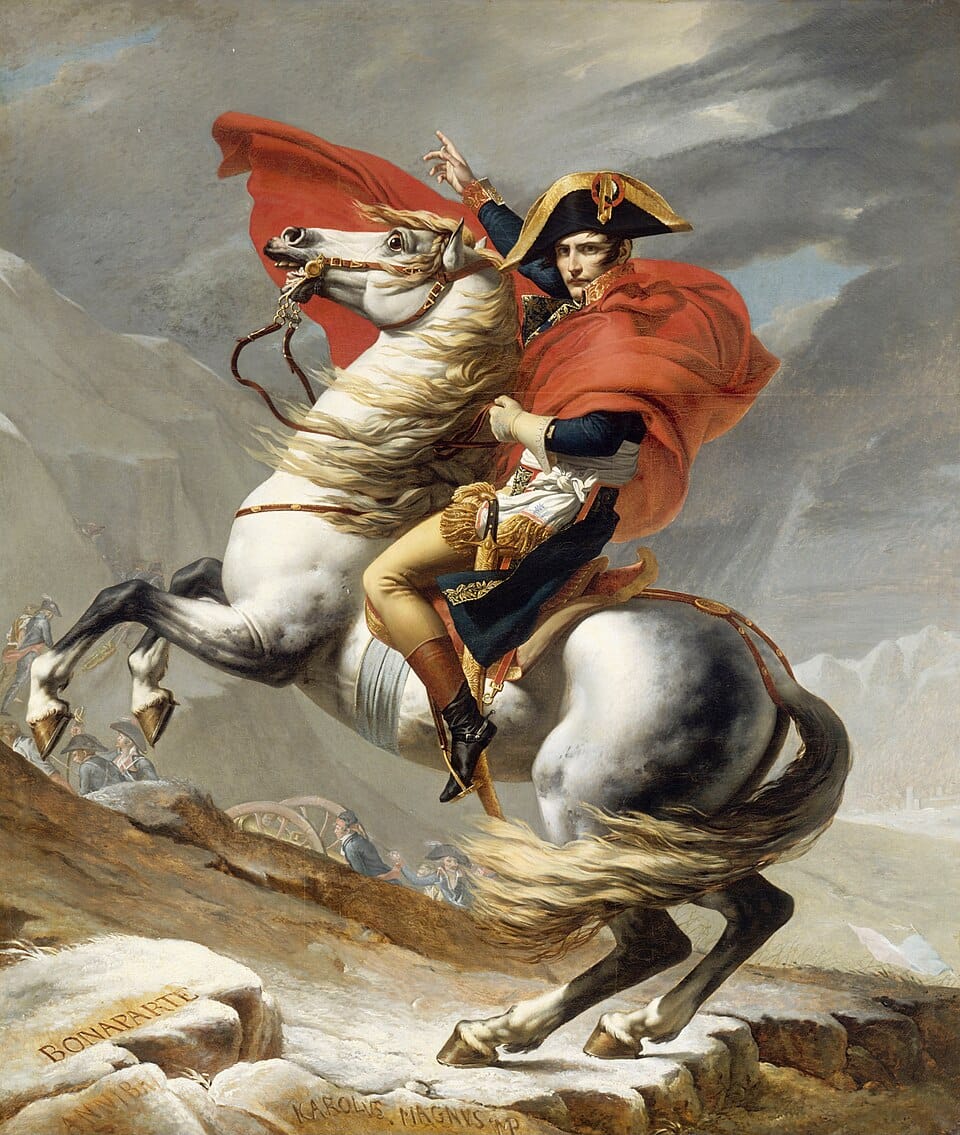
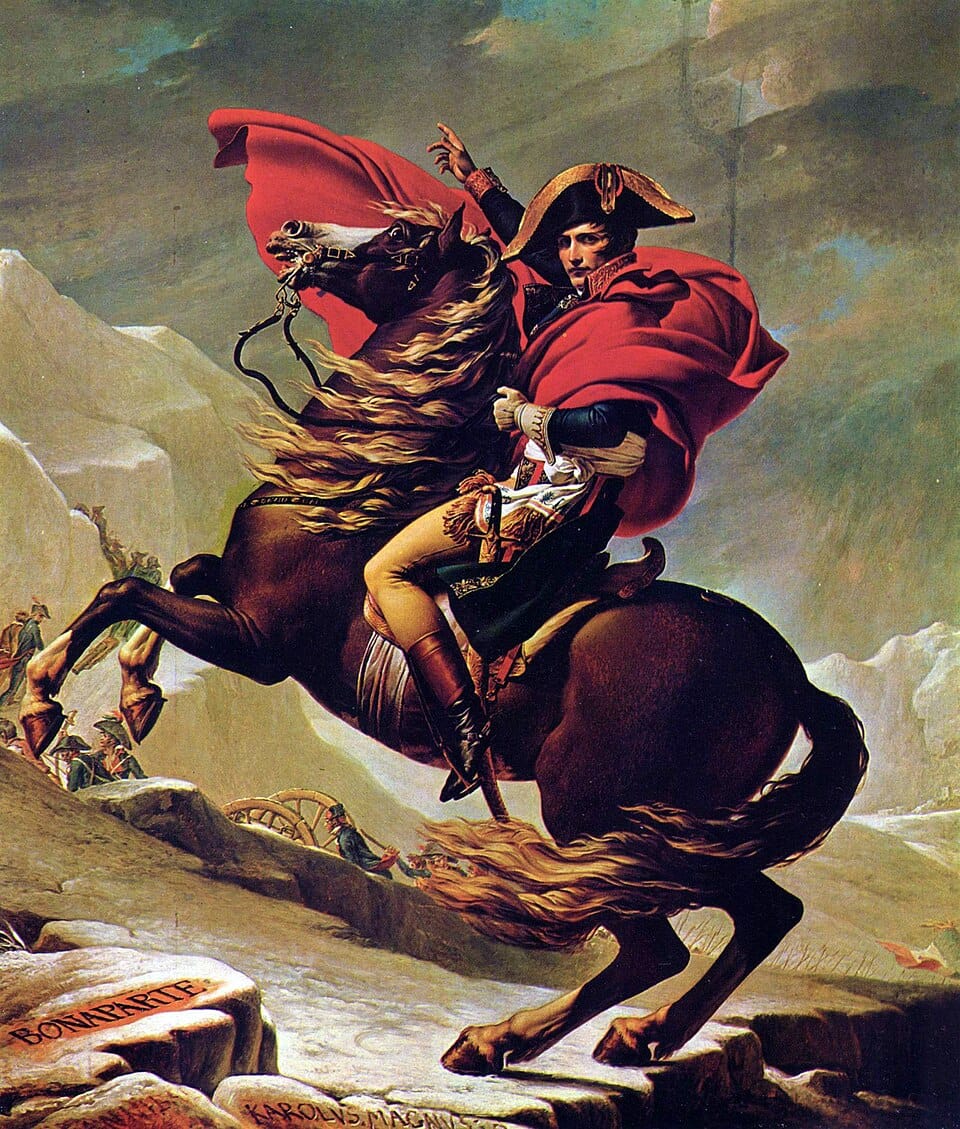
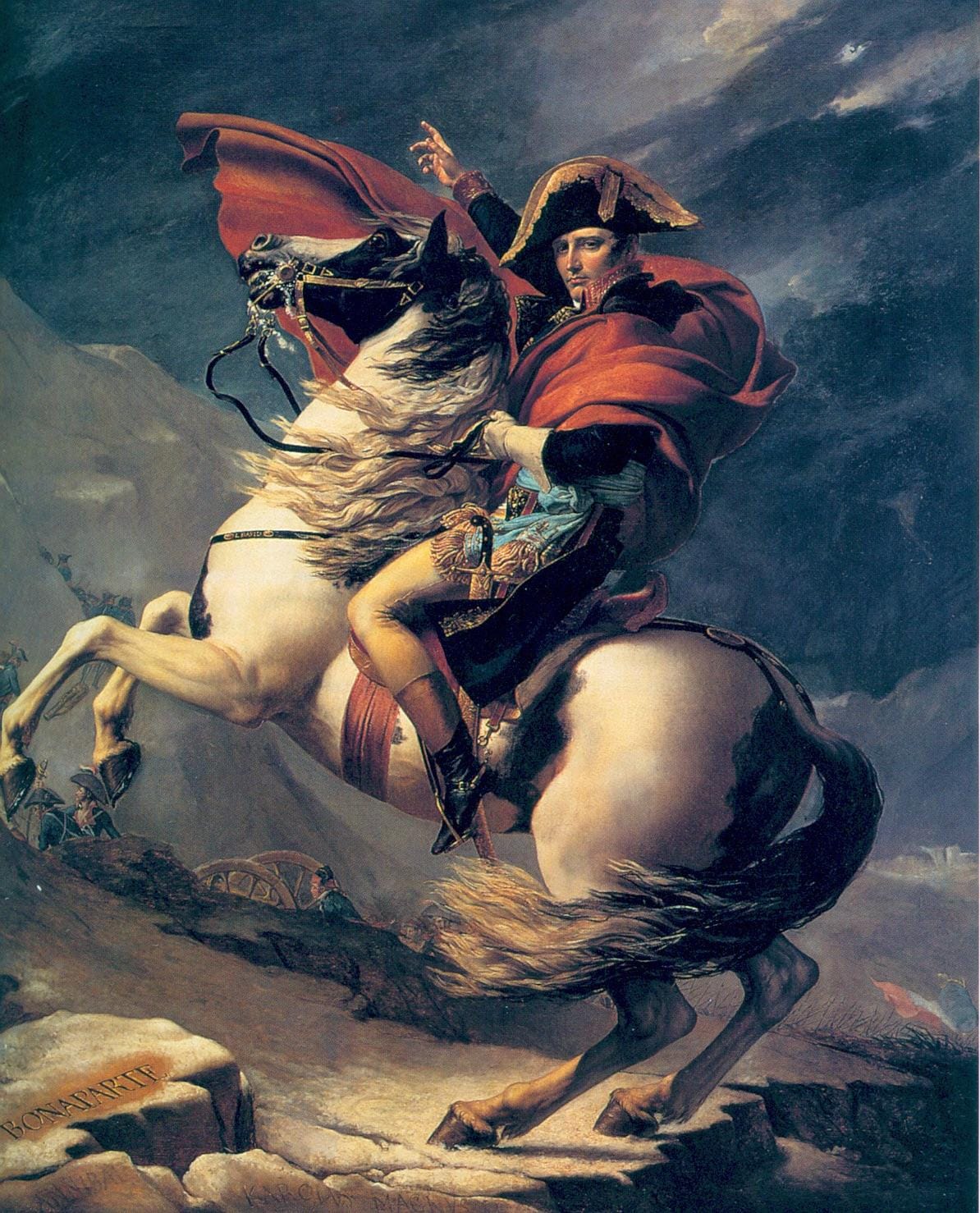
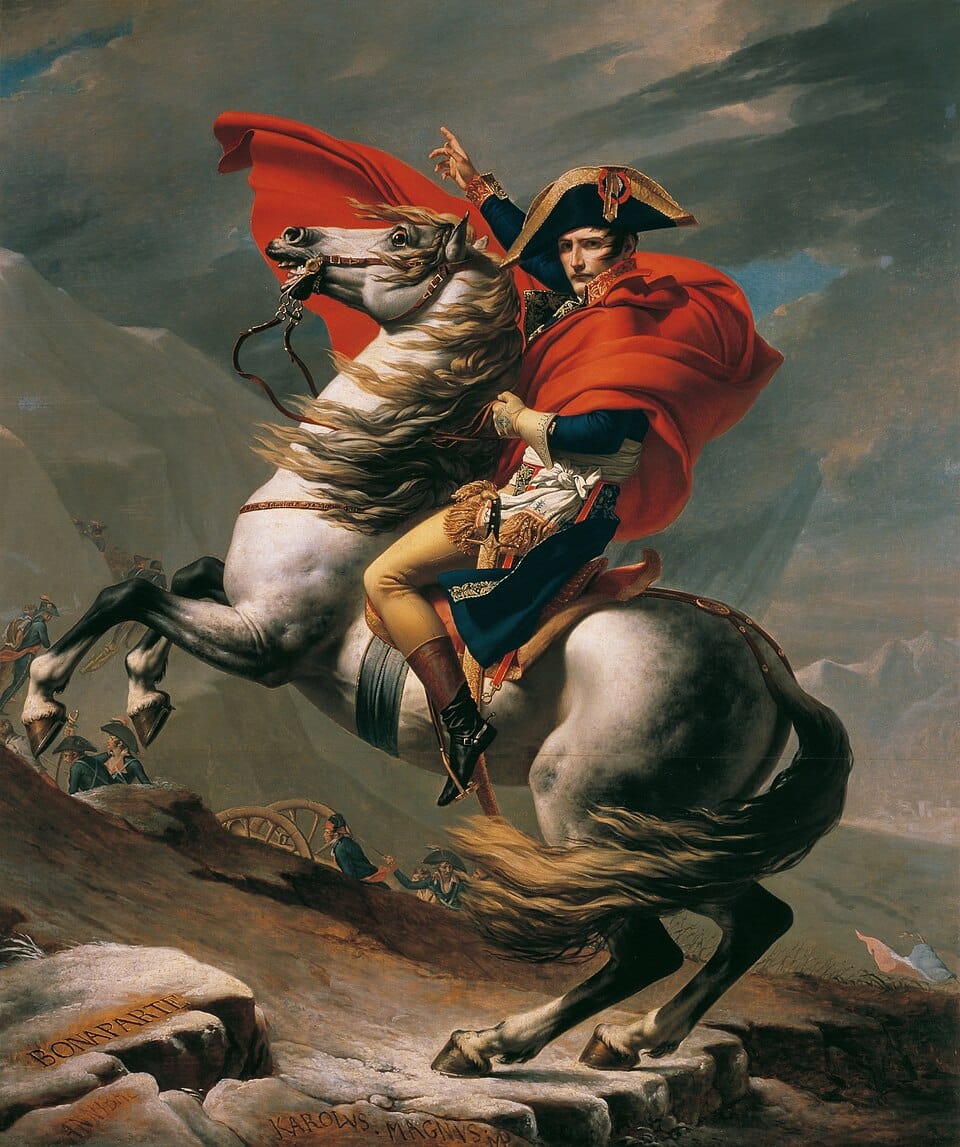
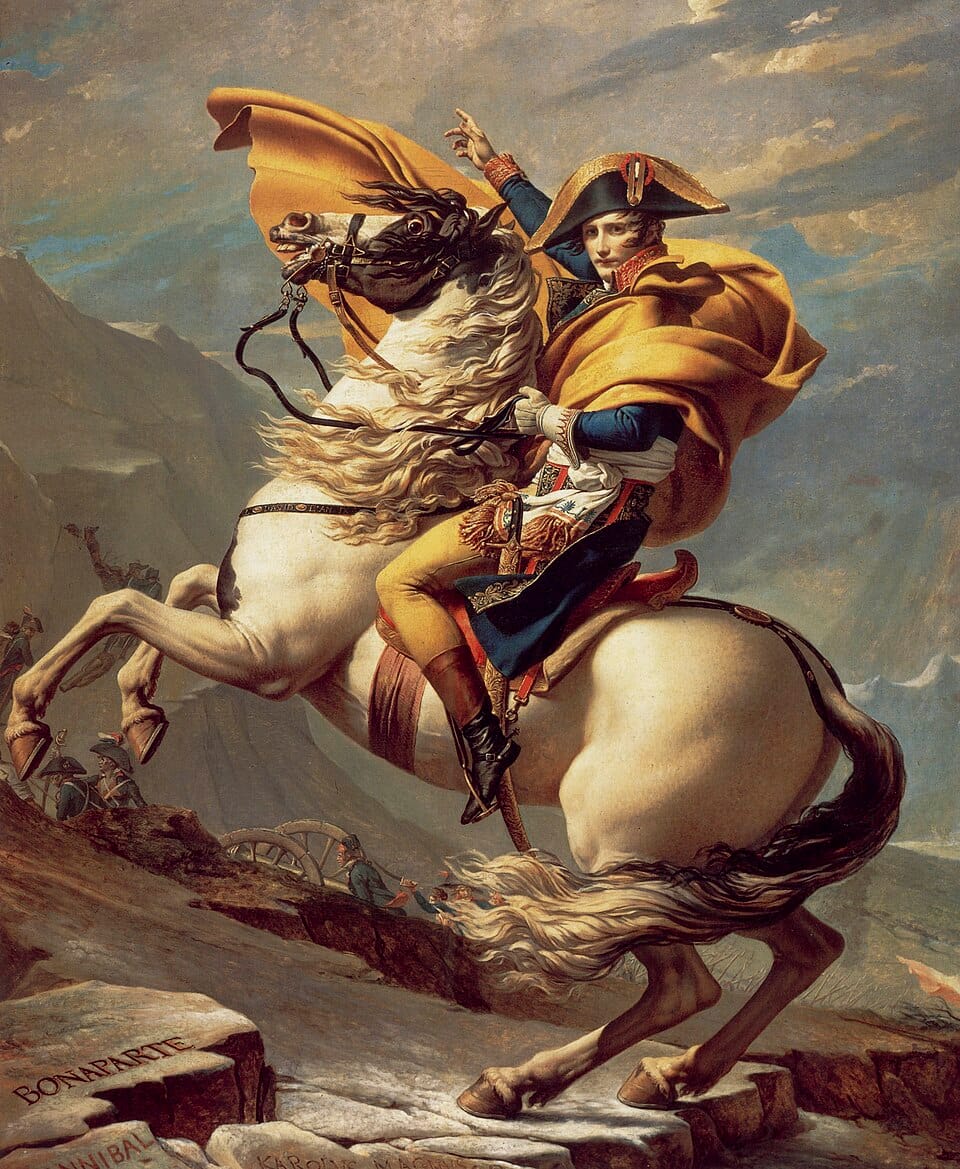
Napoleon Crossing the Alps, Jacques-Louis David (1801 to 1805)
But what really happened?
The weather was fine. Napoleon didn’t lead his soldiers over the mountain; he followed a couple of days behind them. And he didn’t ride a fiery horse. He rode a mule, a slow, safe and sensible animal, led by a local guide on foot.
Fifty years later, a painter called Paul Delaroche painted the truth: a tired-looking Napoleon, wrapped in a grey coat, sitting on a mule in the snow. (A mule is the offspring of a male donkey and female horse... but it's not a donkey or a horse. It's a mule).
Delaroche wasn’t against Napoleon. He admired him and painted him several times, often sympathetically. His mule painting, commissioned by an English admirer, simply showed a real man in a real moment.
The image we see below isn't what Napoleon wanted us to see, but it is meant to depict a more human version of what really happened. In some ways, does this earn more respect?
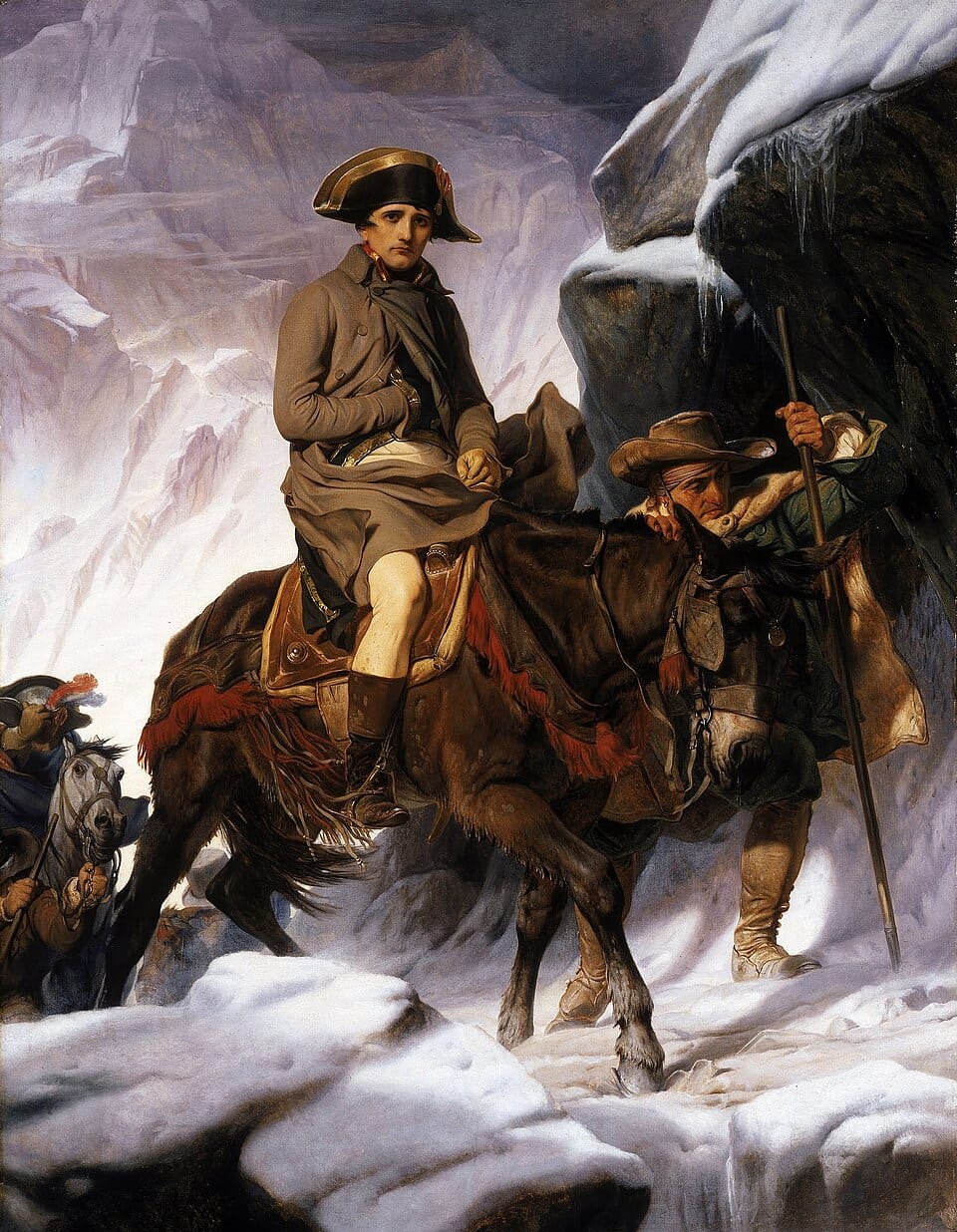
Bonaparte Crossing the Alps, Paul Delaroche (1850

Two hundred years earlier, just across the English Channel, a queen was fishing for compliments...
The Queen’s Question
In 1660, someone found an old manuscript in Edinburgh Castle. Nobody knew who had put it there, or when. The pages were damaged by time and by war, but most of the words could still be read.
It was a set of memoirs.
memoirs noun, plural
A written account of someone’s own life and experiences, especially of the famous people and important events they saw.
The memoirs belonged to Sir James Melville, a Scottish diplomat. In them, he described the most powerful people of his time: kings, queens and the secrets of their courts. And one of his most vivid memories was a visit to London, a long time before, in 1564.
Melville had been sent by his queen, Mary, Queen of Scots, to the court of her cousin, Queen Elizabeth I of England. The two queens had never met. They were relatives, and ruled neighbouring kingdoms. Mary was younger, taller and famous for her beauty.
Elizabeth knew this. And she wanted him to tell her the truth. Or rather, she wanted him to tell her her truth.
At Elizabeth’s court, praise was a kind of currency. Jobs, land and titles all came from the Queen, and the way to earn her favour was to admire her. But when she fished for compliments, she was also testing people. How a courtier or a foreign diplomat answered showed her how loyal he was, how clever, and how far he would go to please her. For Melville, every answer was diplomacy.
court noun
The king or queen and all the people who live and work around them; also the palace where they live.
Melville was sent to the court of Queen Elizabeth I.
courtier noun
A person who spends time at a royal court, often trying to win the monarch’s favour.
Her courtiers competed to give her the best compliments.
court noun
- A court of law: the place where trials happen, or the judges and officials themselves.
He had to appear in court as a witness. - A sports court: an area marked out for games like tennis, basketball or squash.
We booked a tennis court for Saturday. - A royal court: a king or queen and the people around them, as in Elizabeth’s story. Today it’s mostly historical or formal.
The Japanese imperial court still follows ancient traditions. - An open space or building: a courtyard, or part of a name for buildings and streets.
They live in Rose Court, near the station. (Also: a food court in a shopping centre.)
Useful phrases
- the ball is in your court: it’s your turn to act or decide. I’ve sent my offer. The ball’s in their court now.
- take someone to court: to start a legal case against them.
- settle out of court: to reach an agreement without a trial.
- hold court: to be the centre of attention, with people gathered around you listening. At the party, Dad was holding court by the barbecue.
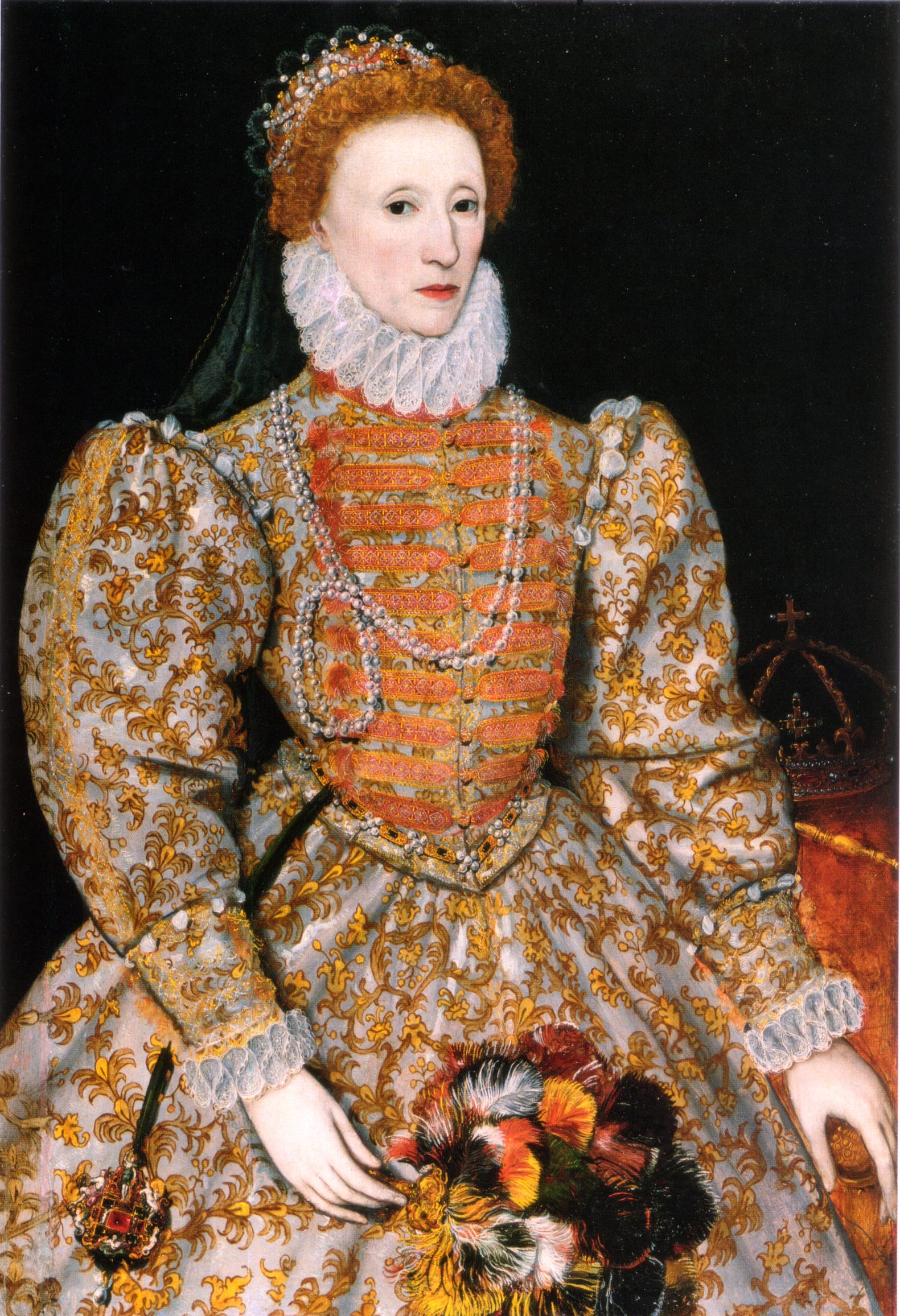
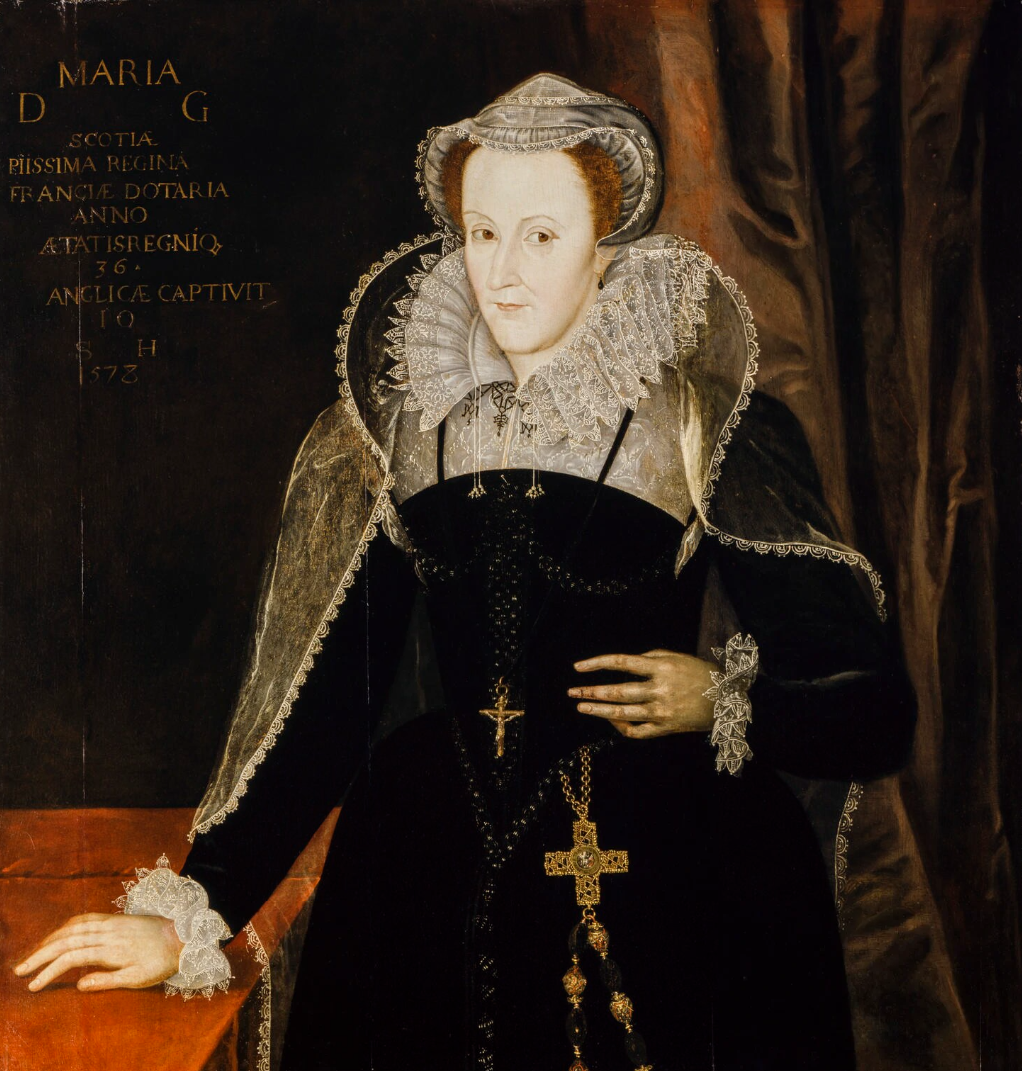
Left: Elizabeth I, the Darnley Portrait (c. 1575). Right: Mary, Queen of Scots, by Nicholas Hilliard (c. 1578).
Every day of Melville's visit, the Queen appeared in a different dress. One day it was English, the next day French, the next day Italian.
“Tell me, Sir James,” she said, turning slowly in front of him. “Which of these suits me best?”
Melville thought carefully. “The Italian, Your Majesty.”
She smiled. The Italian style showed off her hair, which was golden-red and curled naturally. Melville noticed she was pleased. But she had more questions.
“And what colour of hair is considered the most beautiful?” she asked. “Mine, or your queen’s?”
“The beauty of them both,” he said, “is not their worst fault.”
It was a clever answer, but Elizabeth didn’t want clever. She wanted a winner. She was fishing for a compliment.
“Which of us is the fairest?”
“Your Majesty is the fairest queen in England,” said Melville, “and mine is the fairest queen in Scotland.”
Elizabeth looked at him. She was not satisfied. So he tried once more: they were both the most beautiful ladies in their countries. Elizabeth’s skin was whiter, but Mary was very lovely.
The Queen moved on. “Which of us is taller?”
“My queen,” Melville admitted.
“Then she is too tall,” said Elizabeth, “because I myself am neither too tall nor too short.”
“And does she play music?”
“Sometimes, the lute and the virginals.”
“Does she play well?”
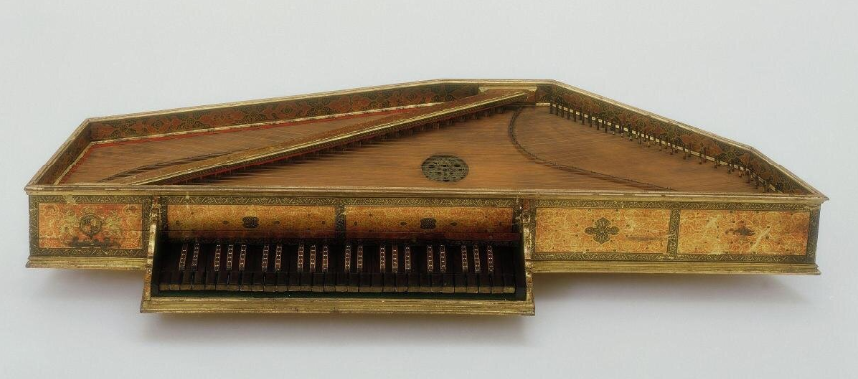
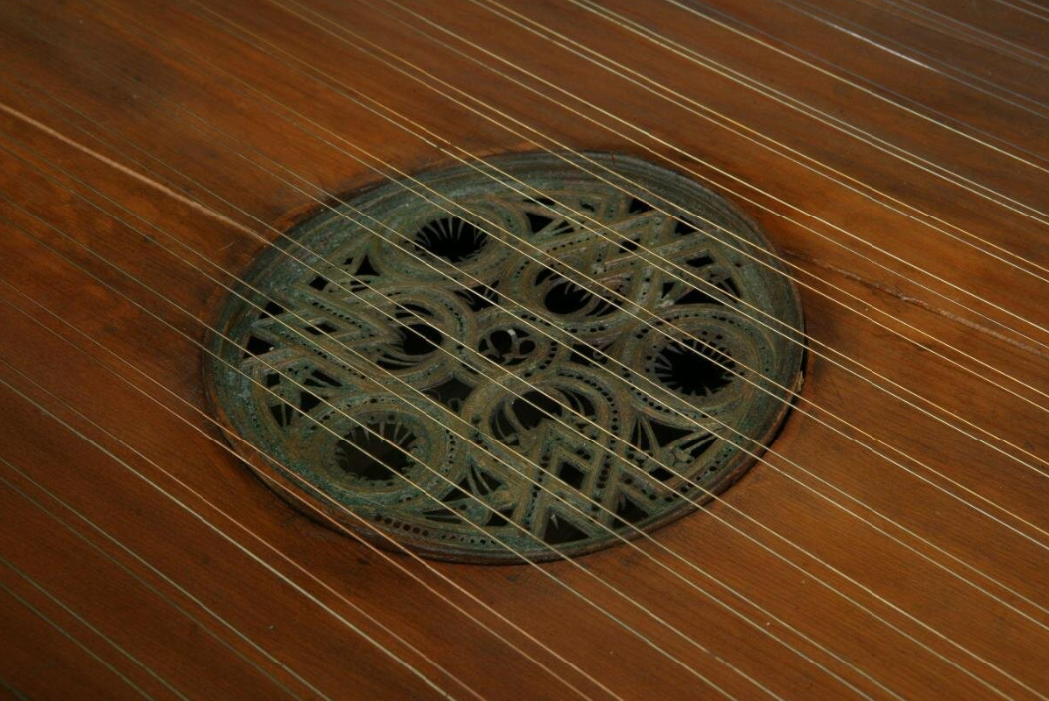
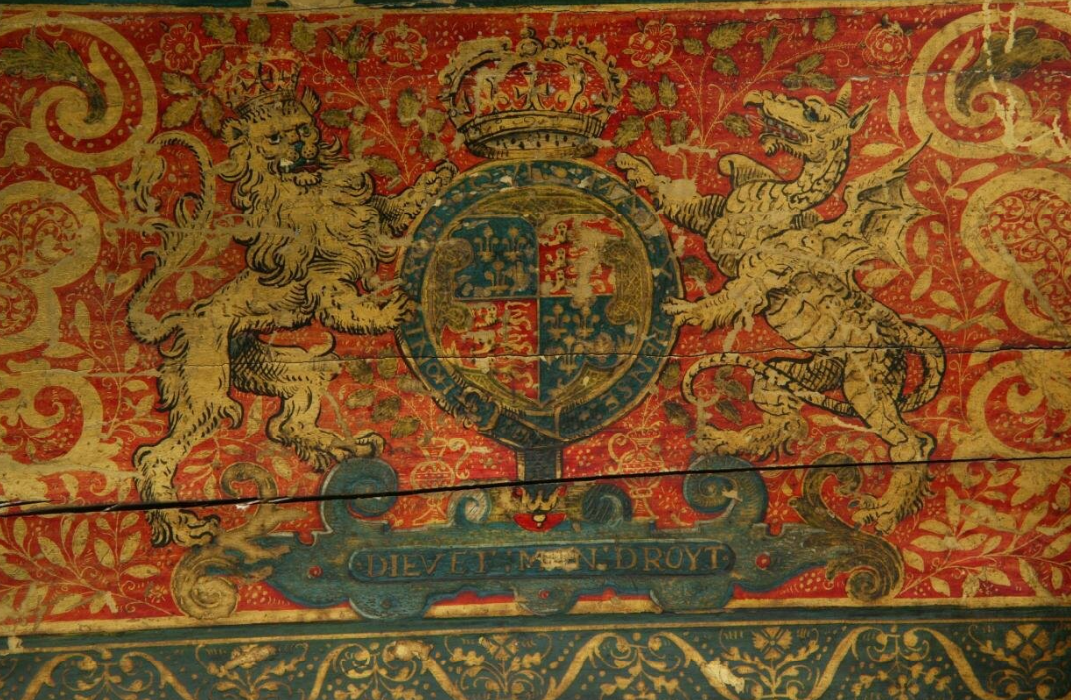
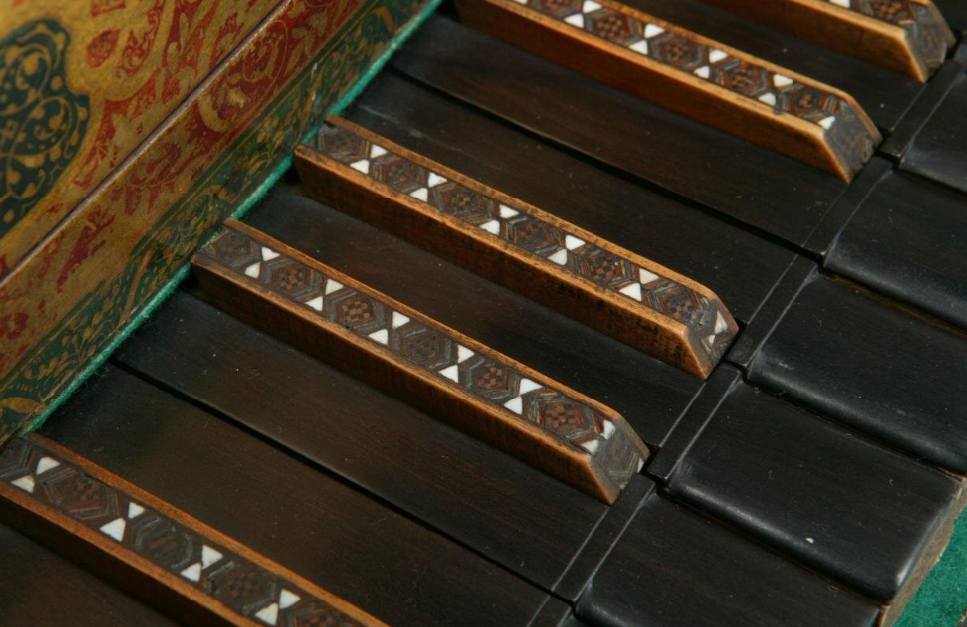
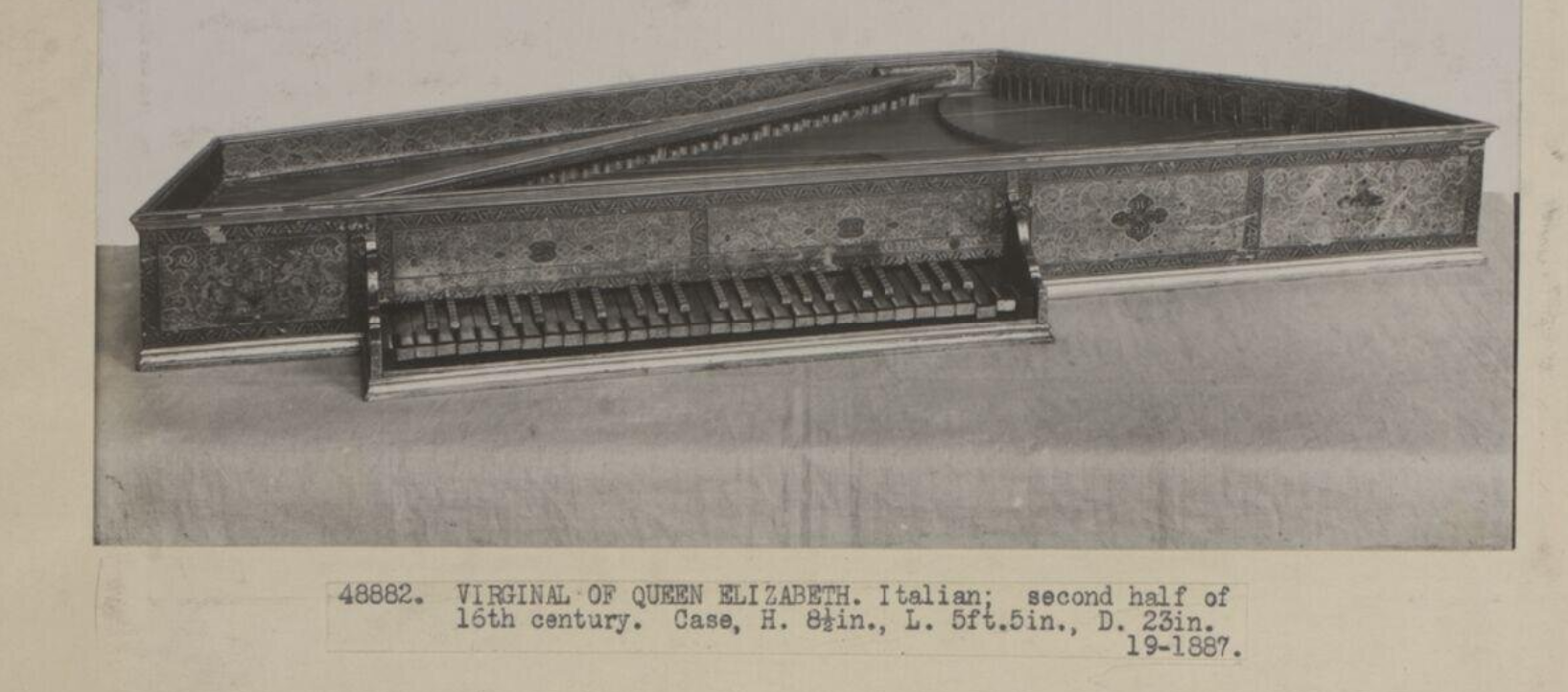
The Queen Elizabeth Virginal c. 1570 (made), 1961 (restored)
...
Melville's choice of words was as diplomatic as possible. “Reasonably,” he said, “for a queen.”
That same afternoon, after dinner, one of the Queen’s lords took Melville quietly by the arm and led him to an empty gallery. “I shouldn’t be doing this,” he whispered. Then Melville heard it: music. Someone in the next room was playing the virginals, a small keyboard instrument, and playing beautifully.
It was the Queen.
Melville listened for a while. Then he lifted the heavy tapestry that hung over the doorway, and looked inside. Elizabeth was sitting with her back to the door. Quietly, he stepped into the room and stood there, listening.
Suddenly the music stopped. The Queen had turned around.
She looked surprised. Very surprised. She stood up, came towards him, and raised her hand as if she was going to hit him.
“I never play in front of men!” she said. “Only when I am alone, to keep away sadness.”
Her exact words were “when solitary, to shun melancholy”.
“Forgive me, Your Majesty,” said Melville, bowing low. “I was walking past and heard such wonderful music that I was pulled into the room before I knew it. I grew up at the French court, where people are less formal. I will accept any punishment you choose.”
But there was no punishment. Instead, the Queen sat down on a cushion. Melville knelt beside her on the hard floor, and with her own hand, she gave him a cushion for his knee. He refused, she insisted.
Then she looked at him and asked one more question.
“So, Sir James. Who plays better? Your queen, or me?”
Many years later, as an old man, Melville wrote down his answer:
“In that I found myself obliged to give her the praise.”
She had set the bait. She had cast the line. She had waited, patiently, all day.
And finally, she caught herself a compliment.
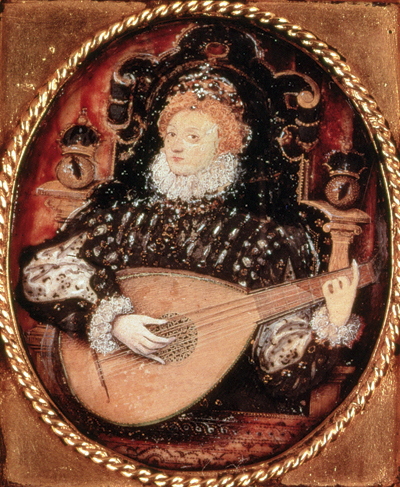
There's a closely related idiom that I must mention... milking it.
- Fishing for something = Trying to get/seek something you don't have yet (indirectly asking for praise, info, or sympathy).
- Milking it = Exploiting or overusing a situation/advantage you already have to get as much benefit, attention, or sympathy out of it as possible.
milk it
To make a small problem seem bigger, so you get attention or special treatment.
He only bumped his knee, but he’s asking everyone to make his coffee. He’s milking it. (This episode of The Office comes to mind)
milk your success
To keep talking about an achievement long after people have stopped caring.
Yes, you scored the winning goal. Three weeks ago. Stop milking it.
milk something for all it’s worth
To get as much benefit as possible from a situation.
The studio milked the film for all it’s worth, with three sequels and a TV series.
Words and quiz
The words
The quiz
Values
This one touches at least five values.
Humility
Not thinking you're more important than you are. Napoleon on a fiery horse had none; Napoleon on a mule had a little.
Confidence
Feeling secure in yourself, without needing other people's praise. The opposite of fishing for it.
Loyalty
Standing by the people you belong to. Melville defended his queen, even in front of Elizabeth.
Dignity
Keeping your self-respect, whatever happens. Melville stayed polite and calm while every question was a trap.
Honesty
Telling the truth, even when it isn't what people want to hear. Delaroche painted the mule.
Which of these is most important to you?
Writing task
Choose whatever speaks to you. You don't have to answer everything, and there's no word limit.
- Pick one of these values. What does it mean to you, and when did you last need it?
- Can you be honest and kind at the same time? Think of a moment when the two pulled in different directions.
- Is confidence the opposite of fishing for compliments, or can confident people fish too?
- Which do you respect more: Napoleon on the horse, or Napoleon on the mule? Why?
- Have you ever fished for a compliment, or been asked a question like Elizabeth's? What did you say?
- Open prompt: Write about a time you received a compliment you'll never forget.
Themes in literature
Three big ideas from this week that writers have explored for centuries.
Vanity as downfall
When the need to be admired leads to disaster. In King Lear, the old king asks his daughters to prove their love with words, believes the flatterers and banishes the one who loved him most.
Heroism, real and perceived
The gap between the hero people see and the person underneath. David's painting shows the legend; Delaroche's shows the man.
The power of words
How a few carefully chosen words can protect you, trap you or win a kingdom. Melville survived the whole visit with his.
Can you think of a book or film that explores one of these themes?
Grammar to borrow
Three structures from the story to try in your own writing.
Neither… nor
For saying that two things are both not true.
"I myself am neither too tall nor too short."
Try it: describe yourself, your city or your weekend using neither… nor.
Reported questions
When we report a question, the word order changes back to a normal statement, and there's no question mark.
"Which suits me best?" becomes She asked him which suited her best.
"Does she play well?" becomes She asked whether Mary played well.
Try it: report three questions someone asked you this week.
As if
For describing how something seemed, even if it wasn't true.
She raised her hand as if she was going to hit him.
He talked about his promotion as if he'd won the Olympics.
Try it: write a sentence about someone who was milking it, using as if.