
To Steal Thunder

Welcome to An English Guide. Hopefully this will become a weekly publication, and something to consistently help you expand your vocabulary.
I'll choose one idiom, discuss its origin, and follow it… through philosophy, psychology, history, art, literature, pop culture… the list goes on. Essentially, we are taking one phrase and viewing it through different lenses.
We'll pick up some new words and meet some interesting people along the way.
It's to help you slide into a more engaged gear of the English language: to read more, write more and expand your vocabulary.
Let this guide give you an ever so gentle push.
This journey is in English, but what we learn along the way is up for grabs. Your feedback is always welcome. Let's get into it.
If you wish to print out the vocabulary and phrases, please find a printable PDF at the bottom of this page.
Two phrases from this introduction:
Words
Twelve to look out for in the story.
The Stealing of Thunder
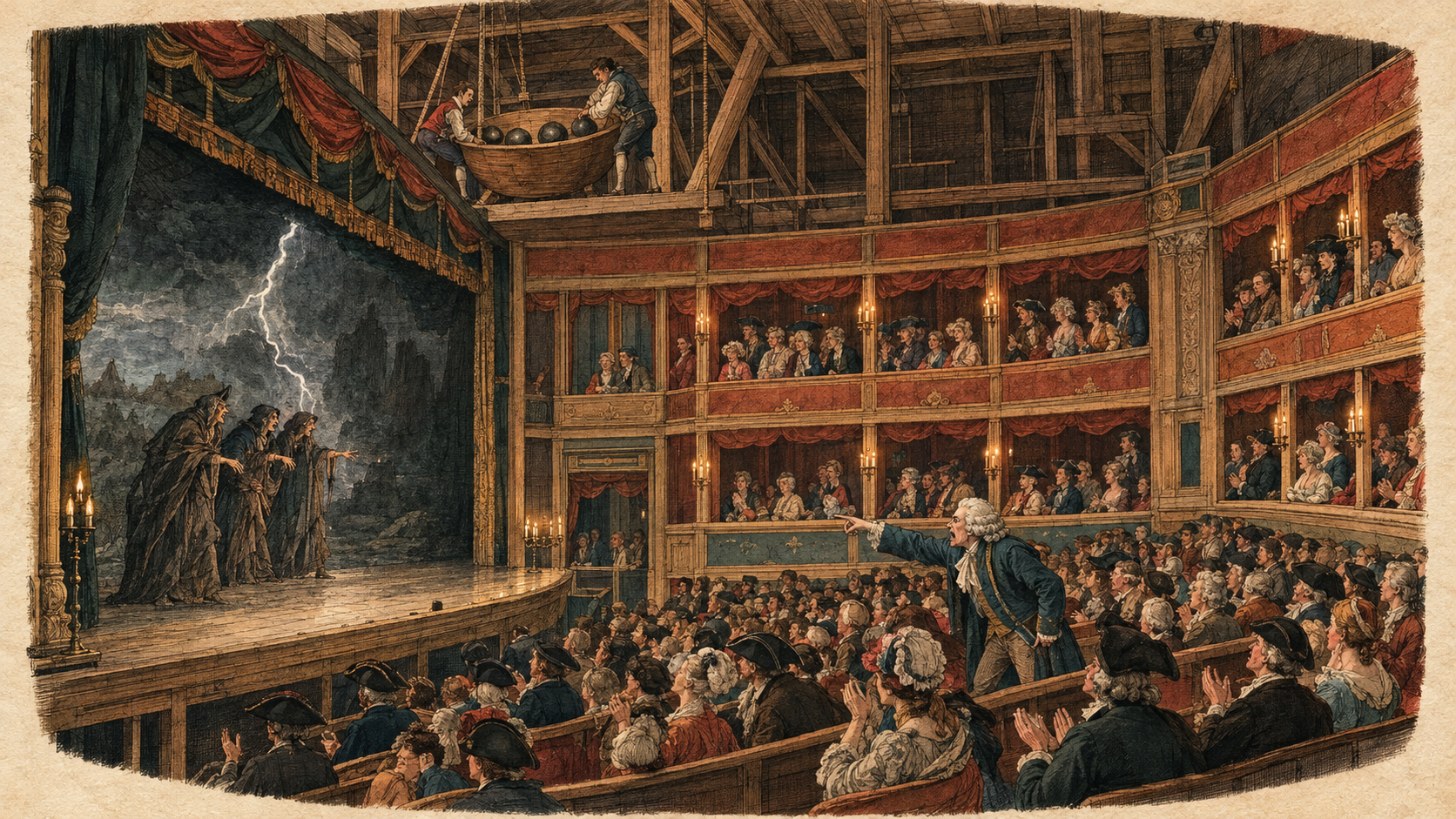
In 1709, a London writer called John Dennis put on a play, and in doing so he managed to invent something quite special… a new way of producing the sound of thunder. He did this by rolling metal balls around in a wooden bowl.
His play was not successful. It flopped. The theatre closed it after a few nights, but soon after, the same theatre put on Macbeth, and they used his technique to create the sound of thunder. Presumably when the witches were casting their spell.
"When shall we three meet again, in thunder, lightning, or in rain?"First Witch, Macbeth, Act I, Scene I
Who do you think was in the audience? Yes, of course! John Dennis. He witnessed the play and realised what had happened… The story goes that he stood up and shouted: "Damn them! They will not let my play run, but they steal my thunder!"
to steal someone's thunder
to take the praise, attention or credit away from another person by doing or saying what they planned to do first.
Adam Smith's Answer
When someone takes credit for something you did, like an idea you had or a joke you told, it can be disappointing, disheartening or, depending on how good it was, it could sting a little. You know that uncomfortable feeling you get in your heart, like someone has stabbed you with a tiny little fork.
How can we explain this sad little sensation?
Well… fifty years after that fateful night, when an idiom was born, a Scottish professor called Adam Smith came up with an answer. He was known as the "Father of modern economics", but he also had some ideas about human morality. In 1759, he wrote a book called The Theory of Moral Sentiments. It was about how we judge each other, and how we judge ourselves.
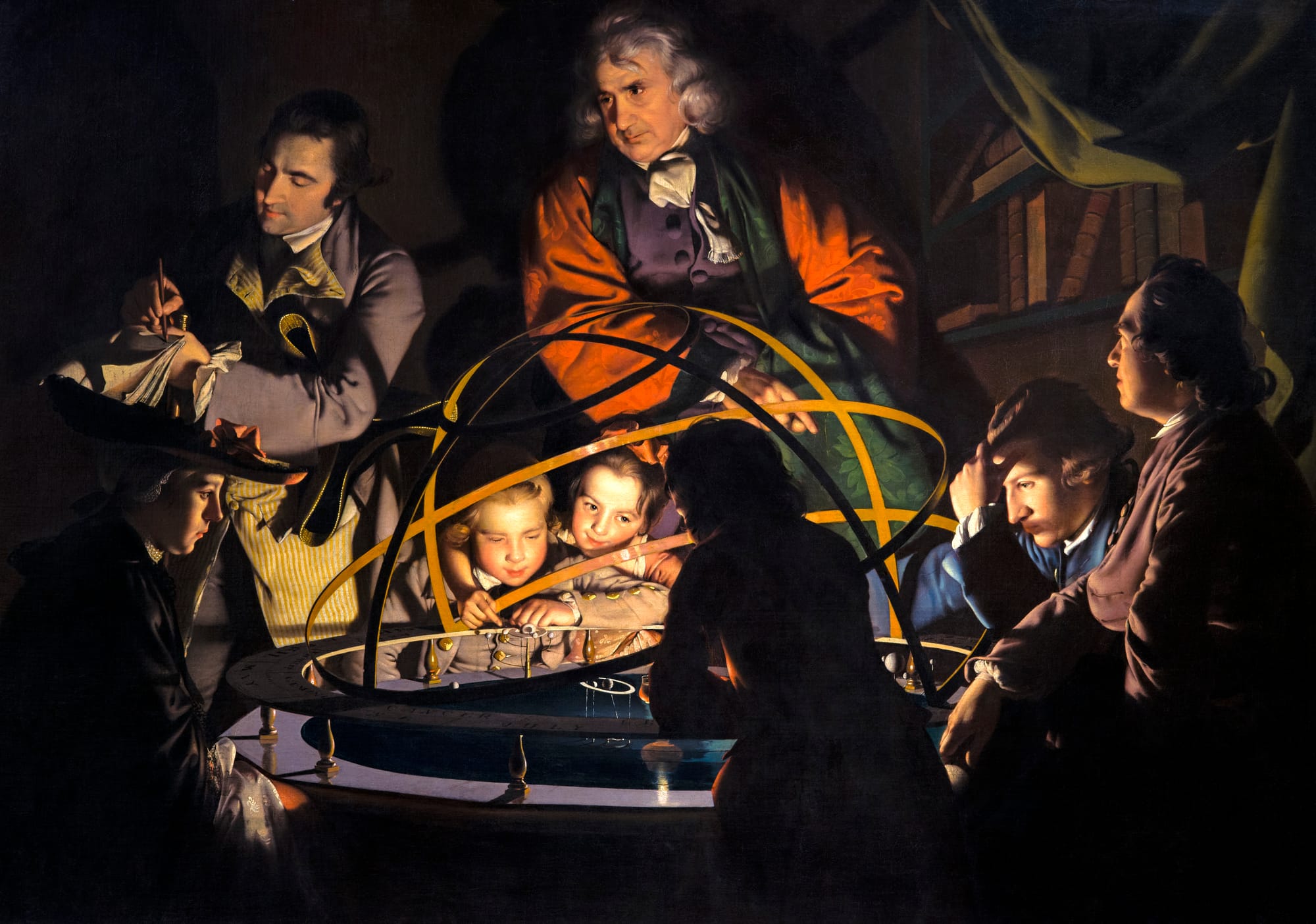
Smith recognised that we humans want two things, and we can mix them up. First, we want praise: people telling us that we did well, appreciating us, thanking us. Second, we want to be praiseworthy, which means that we really did the thing that deserves the praise.
"Man naturally desires, not only to be loved, but to be lovely."Adam Smith, The Theory of Moral Sentiments (1759)
Lovely in modern English means pleasing, kind or attractive. But a more traditional definition means "worthy of love". Therefore, we don't only want people to clap for us, we want to have earned their applause.
The audience of Macbeth were likely impressed by the thunder that shook the Drury Lane Theatre that night, and applauded the sound of it. Whilst the producers that stole that thunder may have enjoyed the recognition, the plaudits would ultimately have been quite hollow.

Stigler's Law
Now to finish, let's bring this to the modern day. We live in a capitalist world full of inventions and new ideas, where receiving credit for the latest innovation can be a hot topic. One film that I find myself watching every so often is The Social Network (2010), which is based on a story of: "You stole my idea!"
There's a scientific law called Stigler's Law, named after the statistician Stephen Stigler. It says that no scientific discovery is named after the person who first made it. Why? Because the credit usually goes to whoever brings the idea to the public, not whoever had it first. To prove his point, Stigler gave the credit for this law to the sociologist Robert K. Merton.
The Social Network shows the law in action. The Winklevoss twins said Facebook was their idea, and they took Mark Zuckerberg to court. But whose name do we think of when we hear "Facebook"?
Which brings us back to poor John Dennis. I believe he found a loophole in the rule… because he stood up and complained. He not only invented the sound effect for thunder, but he immortalised his invention with a catchy new phrase.
I guess that shows the power of language. I doubt theatres use metal balls to produce the sound of thunder any more, but I bet his words still echo within them.
Perhaps you remember this episode?
Values
This one touches at least five values.
- RecognitionBeing seen and praised for what you did. Dennis wanted it and didn't get it.
- SuccessBeing good at what you do. The thunder machine was a clever piece of work.
- CreativityMaking something new. The thunder machine, and Facebook.
- GenerosityGiving credit to others. Stigler handing his law to Merton.
- JusticeEveryone getting what they deserve. What Dennis felt he was denied.
Which of these is most important to you?
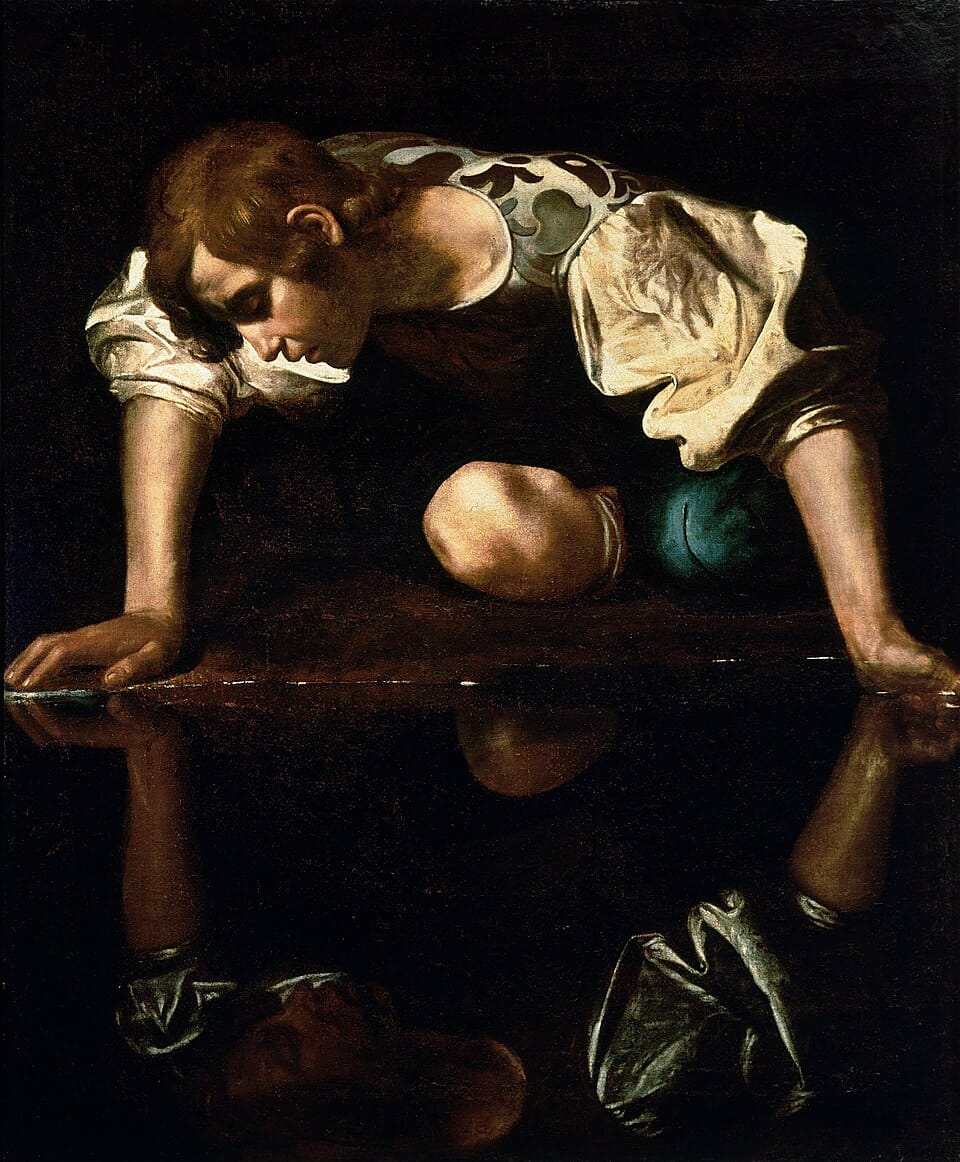
In the Greek myth, best known from the Roman poet Ovid, Narcissus was a young man so beautiful that everyone fell in love with him. He rejected them all, including the nymph Echo, who faded away until only her voice was left. As a punishment, he was made to see his own reflection in a pool. He fell in love with it, couldn't look away, and slowly wasted away at the water's edge. Where he died, a flower grew: the narcissus.
Adam Smith believed we judge ourselves by imagining how other people see us, as if we were looking into a mirror. Narcissus is what happens when the mirror is all you can see. You could say he wanted to be loved, but never asked whether he was lovely. Today, we call someone who constantly needs admiration a narcissist.
Writing task
Choose whatever speaks to you. You don't have to answer everything, and there's no word limit.
- Who should the praise go to: the person who has an idea, or the person who brings it to the world?
- Pick one of these values. What does it mean to you?
- Which value is most important to you, and why?
- Has anyone ever stolen your thunder, or have you stolen someone else's? What happened?
Quiz
Fourteen questions. Choose a, b or c. The answers are at the bottom of the page.
- "The plaudits would have been quite hollow." Plaudits are…
- Praise that is hollow is…
- "Jumping into the river to save a stranger was a ___ act."
- Dennis immortalised his invention. He…
- Disheartening news makes you…
- A fateful night is one that…
- A loophole is…
- "Presumably" is closest in meaning to…
- Your friend announces your good news before you can. She…
- "He passed my idea ___ as his own."
- Someone who keeps talking about his own success is…
- "I don't like her, but ___, she's very talented."
- In Adam Smith's time, "lovely" meant…
- According to Stigler's Law, the credit usually goes to…
Answers
- 1b) praise and approval
- 2c) without real value
- 3a) praiseworthy
- 4b) remembered for ever
- 5a) lose hope
- 6b) important results
- 7a) a gap in a rule
- 8b) probably
- 9a) stole your thunder
- 10b) off
- 11b) blowing his own trumpet
- 12a) give credit…
- 13c) worthy of love
- 14b) whoever brings it to the public