
Professional Speaking Situations

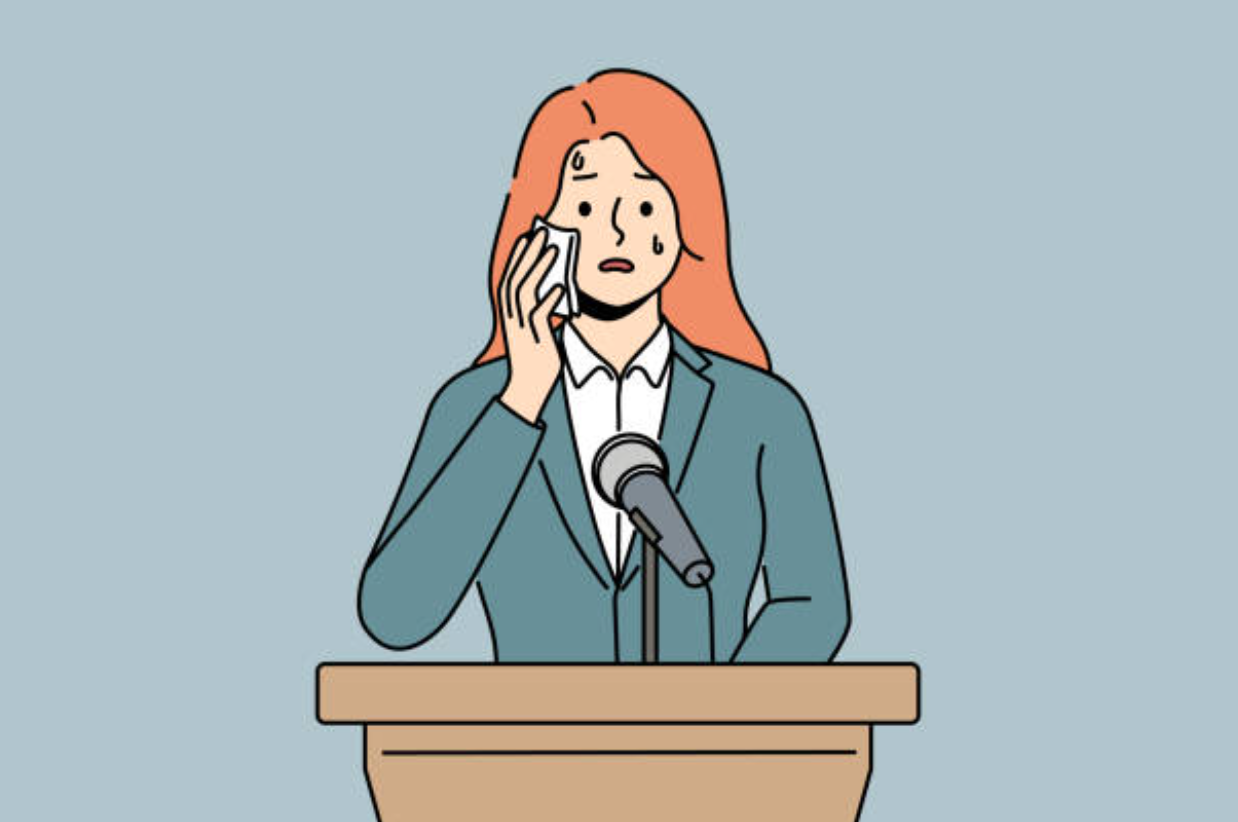
You need time to think before answering a difficult question.
- “That’s a difficult one… I need a second to think about it.”
- “I’ve never really thought about that before, to be honest.”
- “Let me think for a moment… there are a few different ways to look at it.”
You do not want to give a simple yes/no answer because the situation is complicated.
- “It depends, really.”
- “I can see both sides, to be honest.”
- “It’s not as simple as people think.”
You disagree with someone, but you want to sound polite and calm.
- “I understand why people think that, but I’m not sure I completely agree.”
- “That’s a fair point, although I see it a bit differently.”
- “I can see where you’re coming from, but…”
You suddenly remember a personal story connected to the topic.
- “That actually reminds me of something that happened to me once.”
- “Speaking of that… I had a similar experience.”
- “Funny you mention that, because…”
You want to explain your idea more clearly because the listener looks confused.
- “What I mean is…”
- “Let me explain what I’m trying to say.”
- “In other words…”
You want to soften your opinion because you are talking about a sensitive topic.
- “Personally, I think…”
- “From my perspective…”
- “I’d probably say…”
You want to admit that your opinion has changed over time.
- “I used to think that…, but now I’m not so sure.”
- “The older I get, the more I realise…”
- “I’ve started to realise that things are more complicated than they seem.”
You want to give an example from real life to support your point.
- “For example…”
- “A good example of this is…”
- “In my experience…”
Small Talk
Small talk
casual, friendly conversation about unimportant things to fill a silence or warm up
Put someone at ease
to make someone feel relaxed and comfortable
Break the ice
to say or do something to reduce tension at the start of an awkward situation
To build rapport
a friendly, comfortable relationship between two people
Situation:
You're about to interview a candidate for a role on your team. Your hiring manager is running 5 minutes late.
You're alone in the meeting room with the candidate. They look nervous. You want to make them feel comfortable and leave a good impression of the company - without giving too much away about the role, the process or starting the interview.
Useful Phrases & Questions
"We're just waiting for [name] to join us - shouldn't be long!"
(acknowledges the situation)
"Have you come far today?"
(safe conversation opener)
"Can I get you anything while we wait — water, coffee?"
(hospitable and potentially buys you both something to do)
- Did you find us okay?
- Have you been to this part of the city before?
- Are you having a busy week? How's your week?
- How long have you been in your current role?
Staying Professional Under Pressure
Situation
You're working in customer service. A customer is being unreasonably rude — raising their voice, speaking over you, and making personal comments. The complaint itself may be valid, but the way they're delivering it is not.
Your job is to stay calm, acknowledge their frustration, and move the conversation forward - without losing your professionalism or your dignity.
De-escalate — to reduce tension or anger in a difficult situation
Remain composed — to stay calm and in control of your emotions
Acknowledge — to show someone you have heard them, even if you disagree
Boundaries — the limits of what is acceptable behaviour in a professional setting
Empathy — understanding and showing that you recognise how someone feels.
Useful Phrases & Questions
Acknowledging without agreeing:
• "I completely understand this has been frustrating"
• "I can hear that you're unhappy and I want to help resolve this"
• "I appreciate your patience while we work through this"
Buying yourself a moment:
• "Let me just make sure I fully understand the situation"
• "Can I ask you a couple of questions so I can find the best solution for you?"
Gently setting a boundary:
• "I really do want to help you - I just need us to be able to have this conversation calmly"
• "I'm going to do everything I can to sort this out for you"
Moving it forward:
• "Here's what I can do for you right now..."
• "Let me find out exactly what happened and come back to you with a solution"
Technical Difficulties
Situation:
You're about to give a presentation.
You've prepared well, but as you stand up, something goes wrong - the screen isn't working, your slides won't load, or the connection has dropped. Everyone is watching.
Stay calm, address the room, and keep their confidence - with or without your slides.
Buy time — to do or say something that gives you a moment to think or sort out a problem
Improvise — to manage a situation without the tools or preparation you expected to have
Composed — calm and in control, especially in a stressful situation
Transparent — being open and honest about what is happening rather than trying to hide it
Troubleshoot — to identify and fix a technical problem
Useful Phrases
Addressing the room immediately:
- "Bear with me just one moment while I get this sorted"
- "Apologies for the delay — we're just having a small technical issue"
- "While we get this up and running, let me give you a brief overview of what we'll be covering today"
Buying time naturally:
- "This is actually a good opportunity to ask — does anyone have any initial questions before we get started?"
- "While my colleague looks into this, I'm happy to take any questions"
If it can't be fixed:
- "I'm going to go ahead without the slides — the most important things I want to leave you with today are..."
- "Let me walk you through this without the visuals — I'll send everything over afterwards"
Closing the awkwardness:
- "Thank you for your patience — right, let's get started"
- "Technology, eh — shall we just get on with it?"