
The difference between confidence and arrogance.

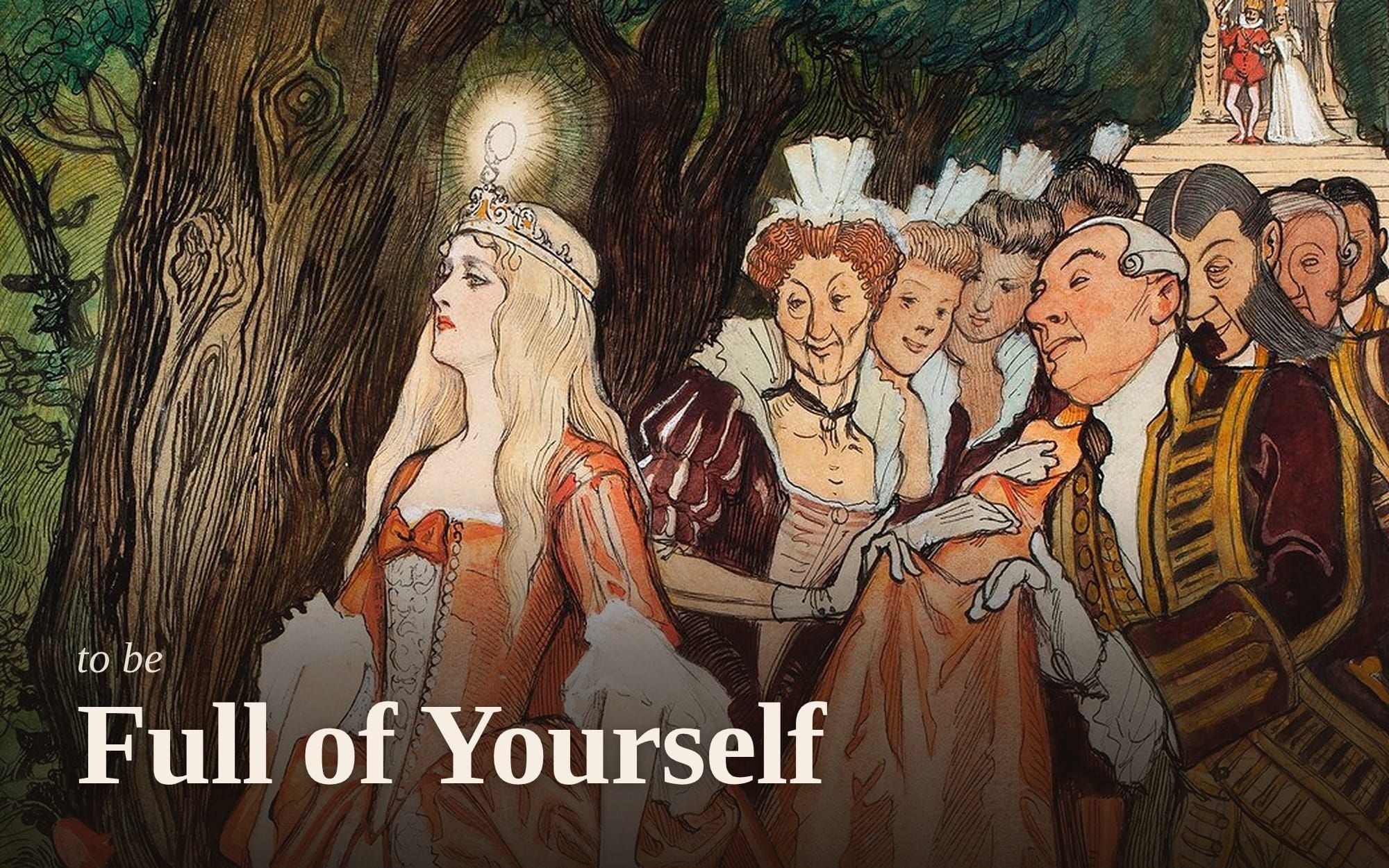
Adalmina's Pearl is a Finnish fairytale by Zacharias Topelius, first published in 1856.
The story begins at Adalmina's christening, where she receives gifts from two fairy godmothers. One gives her a pearl with the power to make her beautiful, intelligent and rich. The other promises that if she should ever lose the pearl and all its powers, she will gain a loving heart.
Her father, the king, had a special diadem made so that she could wear the pearl on her head. She grew up spoilt, never wanting for anything. With all the beauty, intellect and wealth a young princess could ask for, she became unbelievably vain, with a cold heart. She treated people poorly and was completely full of herself.
We'll come back to this story later. First, we must get to the bottom of this expression.
One day, Monika said to me, "Amik's so full of himself!"


Adalmina & Amik
I agreed with her and the phrase stuck.
Soon after, someone on TV described Donald Trump as also being 'full of himself'. This caused a confused and somewhat amused Monika to ask, "Did someone just call Donald Trump fat on TV?"
It turned out that she had been using the phrase to describe Amik in a very literal sense. "His body is physically full of itself". This was her polite way of calling him, not fat, but you know, almost. Like when overweight people are politely called "well-built", "sturdy" or "big-boned".
The common idiomatic use of the phrase means something entirely different.
To be full of yourself is an idiom that means thinking you are very important, clever, or special, in a way that annoys other people. Those who think the world revolves around them, like Amik and Adalmina.
e.g. "I doubt he even thought about what you might need; he’s so full of himself."
It suggests that a person has no capacity for anyone else's ideas, thoughts or feelings, as they are fully occupied with an inflated sense of importance, superiority and self-belief.
The truth is, Amik is in relatively good shape. He often receives compliments for how young he looks. It's those exact compliments which likely inflate his ego and make him so bloody full of himself!
Confidence is a delicate thing, because if you're not careful, it can easily turn into arrogance.
I think we ought to understand the difference.
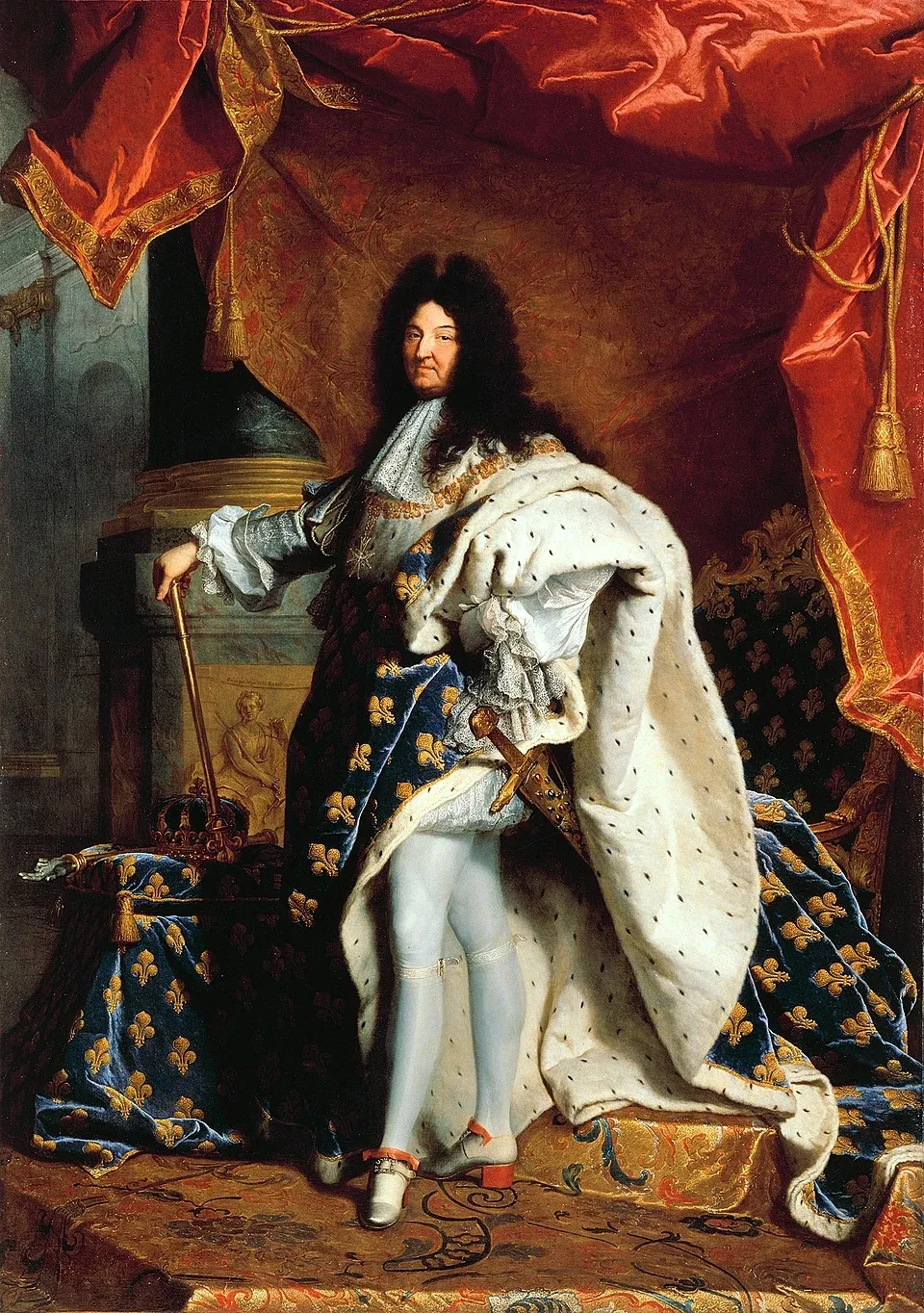
Portrait of Louis XIV (1701) Hyacinthe Rigaud
Above we see Louis XIV, at the height of his power. He looks quite high and mighty, in his robe, carrying a sword and leaning on his royal sceptre. Symbols of status, strength and power.
He chose his own nickname, the "Sun King", and the sun became his personal emblem: the thing that gives life to all things and sits at the centre of everything.
The portrait was meant as a gift for his grandson, the new King of Spain. But he liked it so much that he kept it for himself and had another made. Just look at his expression: if that isn't arrogant, I don't know what is.
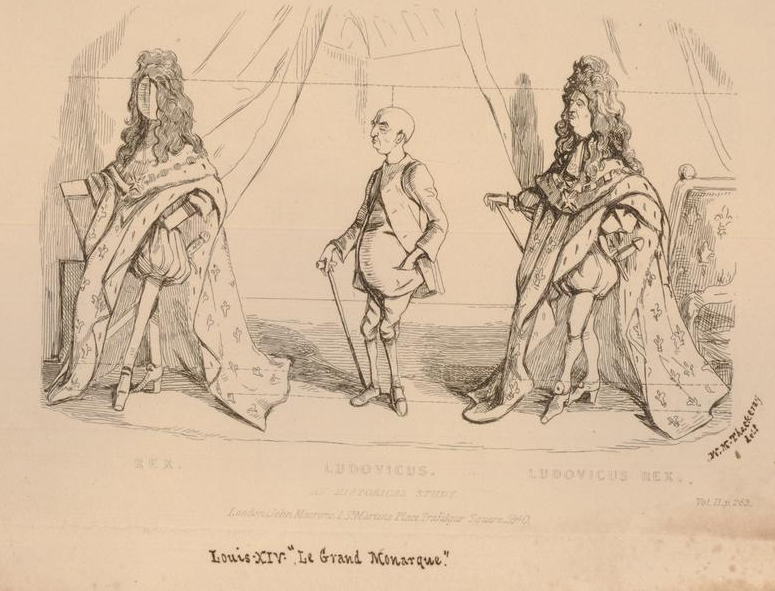
The word "arrogance" comes from the Latin verb arrogare, which means "to claim for oneself" or "to assume".
Arrogance is an attitude of superiority, entitlement, and exaggerated self-importance.
A person demonstrating arrogance often believes they are inherently better, smarter, or more valuable than others, frequently leading them to dismiss or demean those around them.
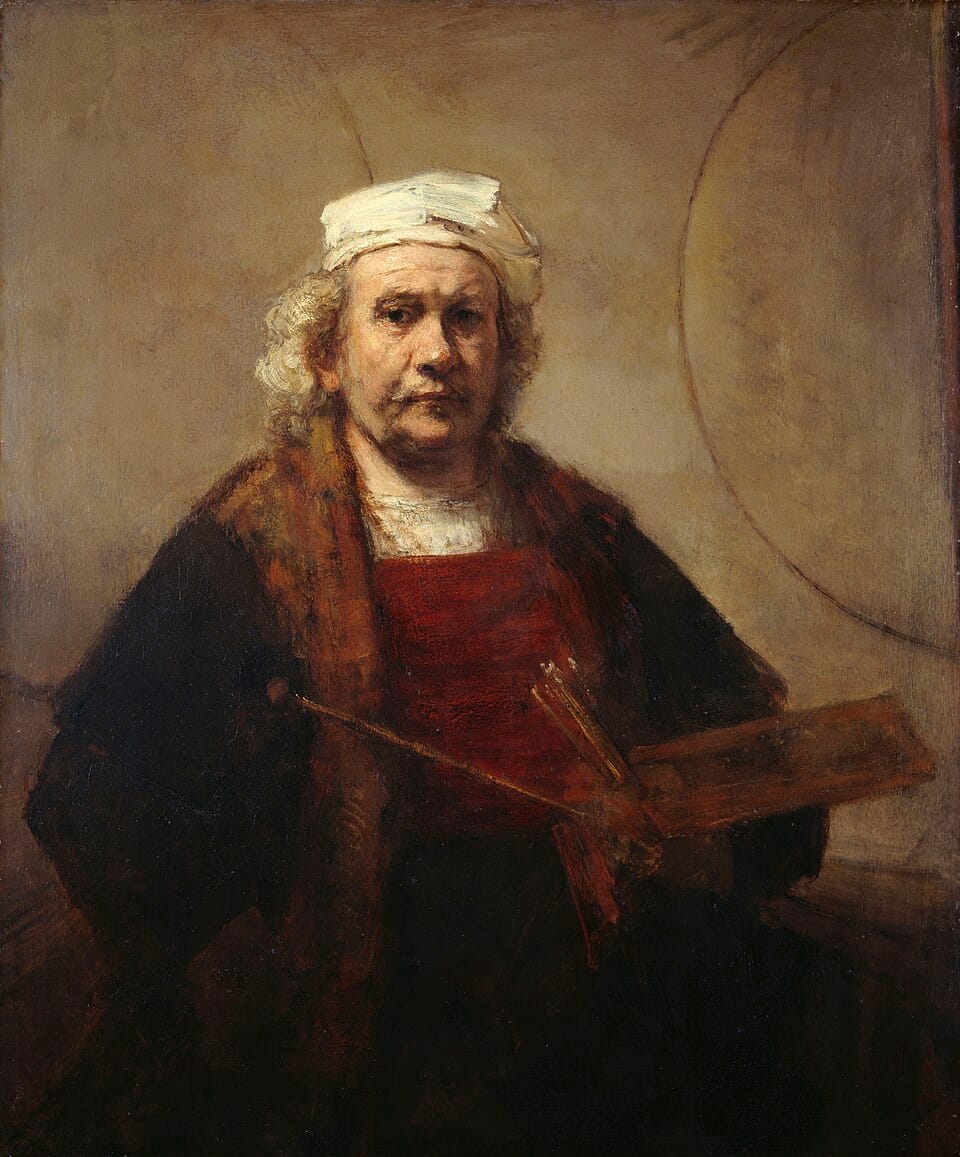
At the time of his self-portrait, Rembrandt had gone bankrupt and lost most of his possessions, except of course his paintbrushes and lovely white hat. Despite his misfortune, he stands self-assured, looking comfortable in his own skin.
It is theorised that a perfectly drawn circle is proof of an artist's innate skill and mastery, but if you look closely at the circle on the right, you’ll see that they aren’t perfect. He used his characteristic short, interrupted strokes to paint them. To me, that's what confidence looks like: not needing to appear perfect.
In a way, confidence means letting go of perfection, because perfectionism can be rooted in the fear of judgment, failure, and not being "enough", whereas true confidence is the willingness to be seen, flaws and all.
Confidence is a belief in oneself, the conviction that one can meet life's challenges and succeed, and the willingness to act accordingly.
Although confidence builds as we become more competent, the risk of becoming arrogant is never left behind.
This was recognised by Aristotle over 2,000 years ago. He believed that people who have money, power or status, but not the character to match, often become arrogant and proud. They can look down on others and copy the truly great, without actually being great themselves.
For him, confidence wasn't something to maximise but something to get right. He'd argue that it sits between two extremes, thinking too little of yourself (insecurity) and thinking too much of yourself (arrogance). The "right amount" isn't to be measured against anyone else, but based on the truth of who you are and what you have done.
Aristotle's Vices and Virtues
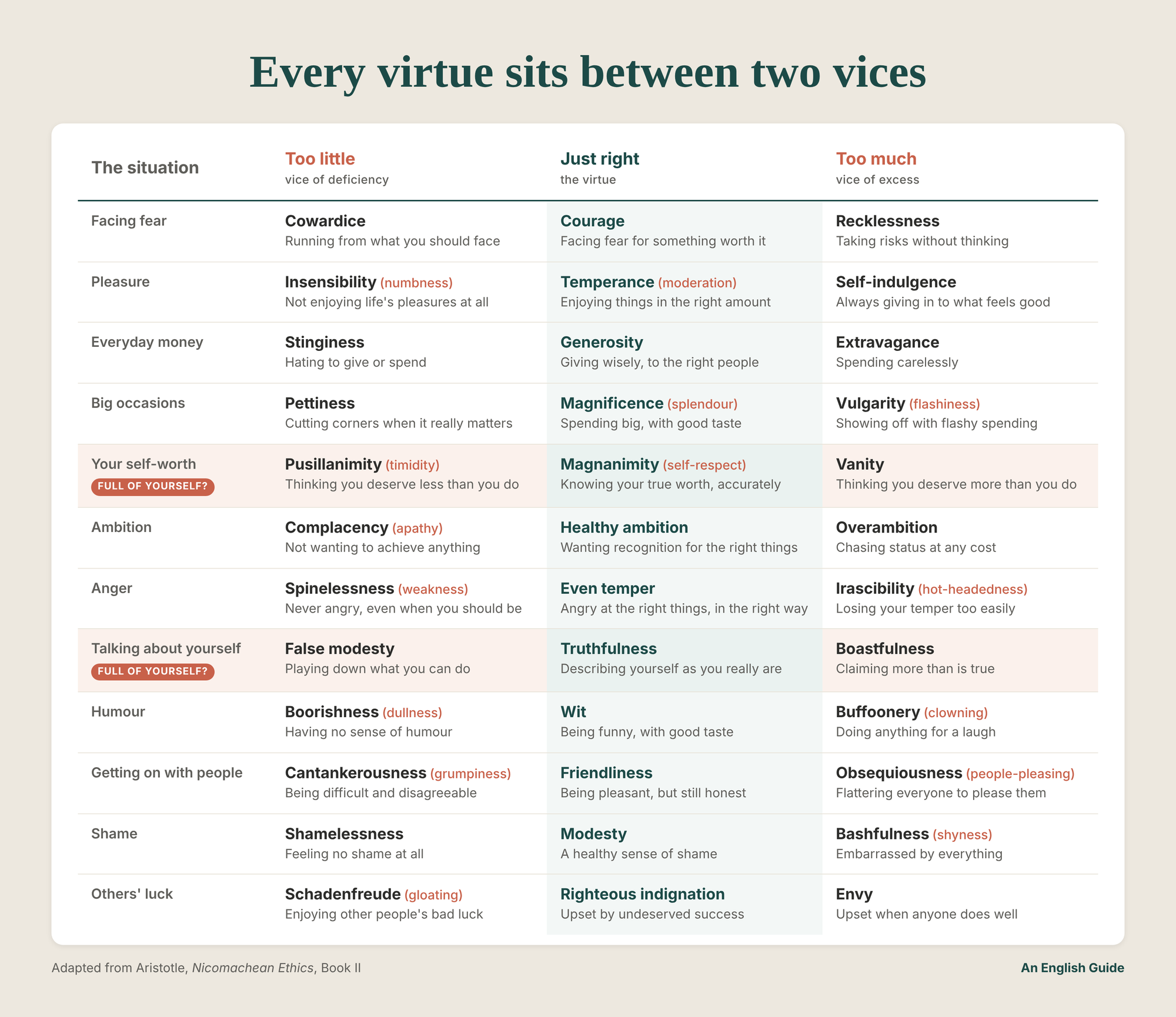
Regardless of your status in life, it's always possible to be insecure, confident or arrogant. Therefore, it's just as possible to be an insecure leader as it is to be a confident homeless person.
We know this to be true.
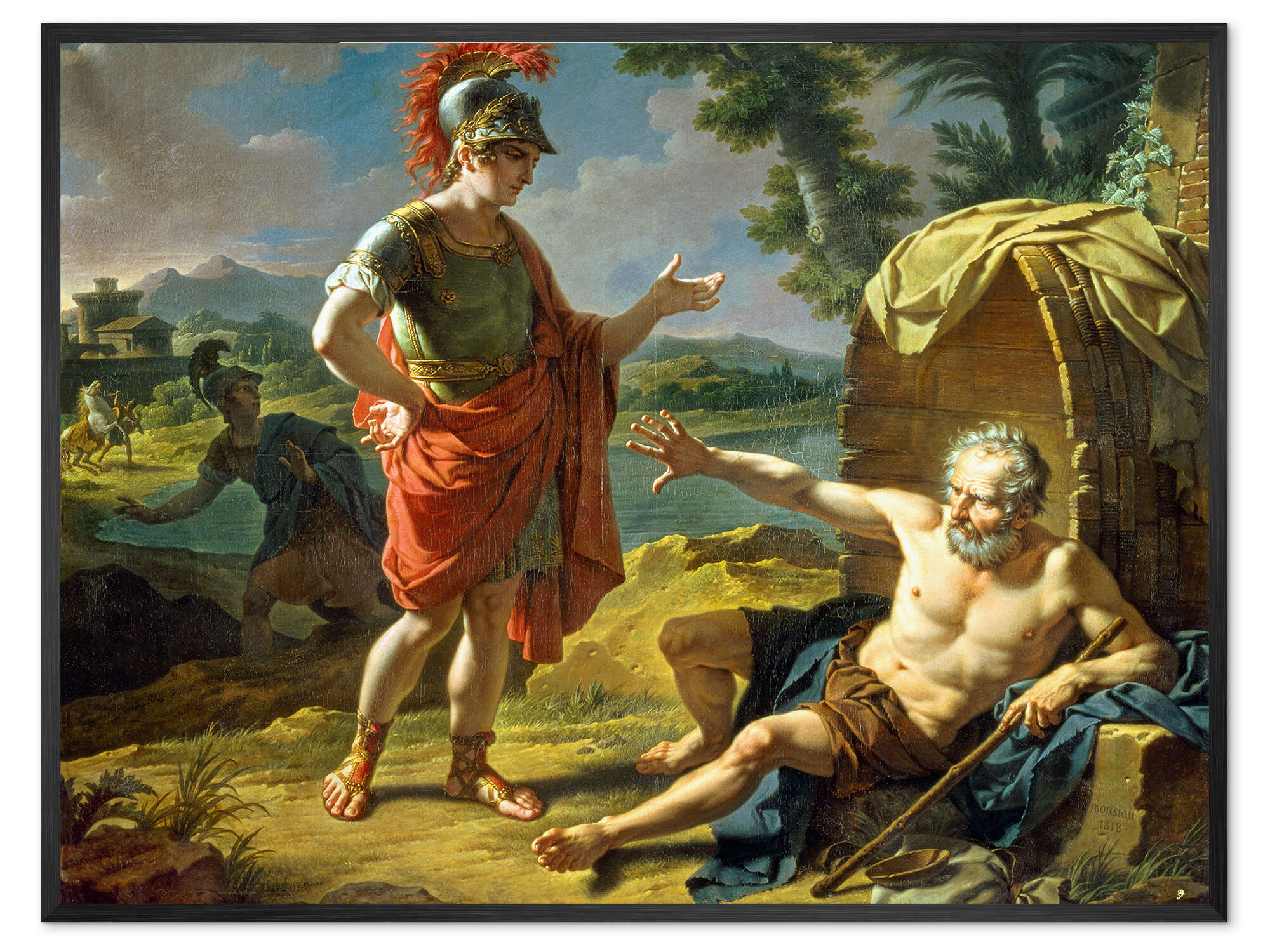
Here you see the encounter between Alexander the Great and Diogenes, two very different characters.
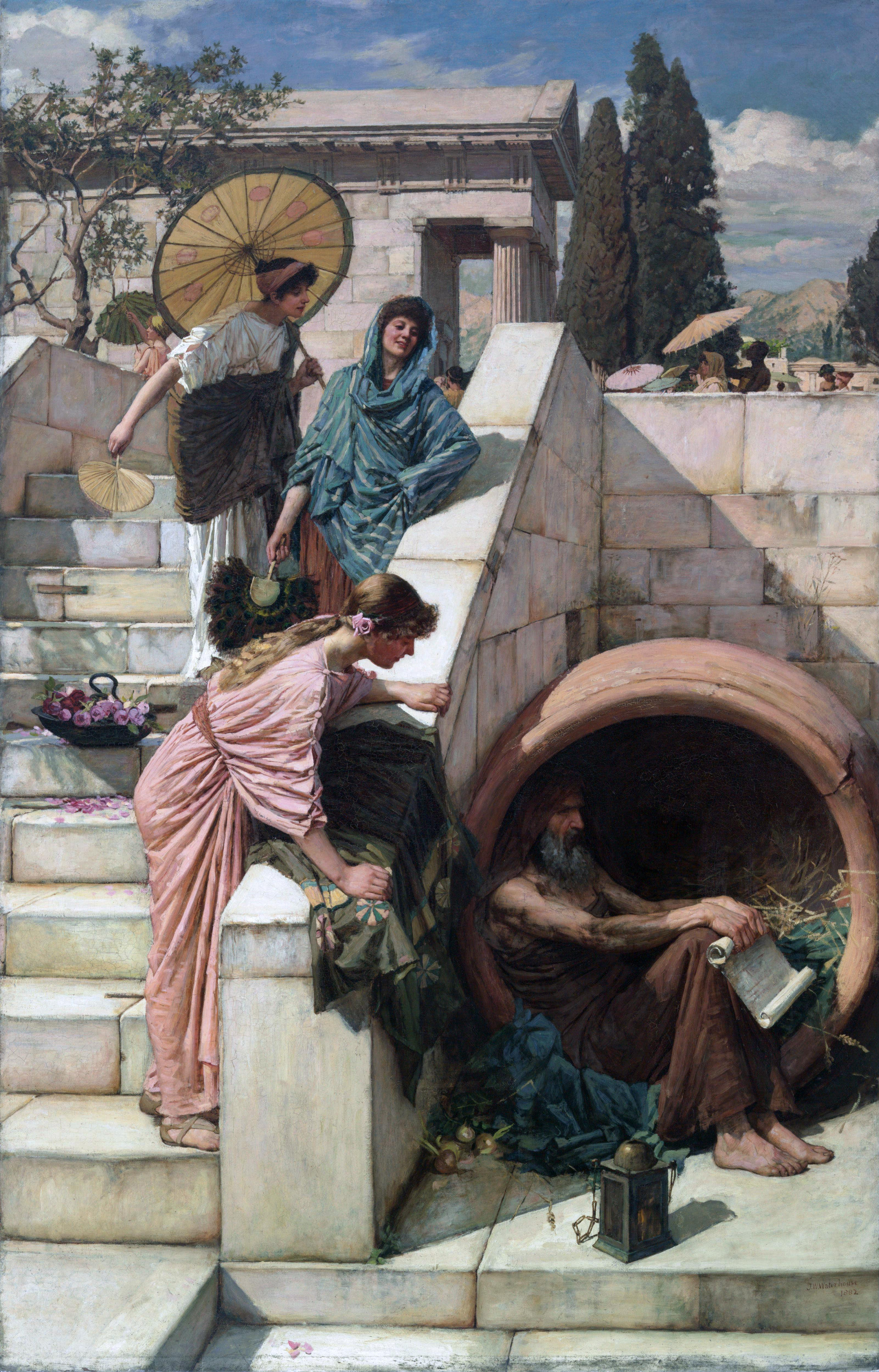
Diogenes was a philosopher who lived in extreme poverty; he rejected status, wealth and societal conventions. He lived in a barrel. He chose to value truth, nature and his own independence, over comfort and reputation.
Alexander the Great, on the other hand, was the most powerful military commander in the known world, driven by a desire for fame, myth and achievement. When he approached Diogenes to ask if he could do him any favour, Diogenes confidently replied, “Stand a little out of my sun”.
Diogenes knew exactly what he valued: simple earthly delights, like the feeling of the sun on his face, something that Alexander could not give him.
Alexander later told his companions: “If I were not Alexander, I would wish to be Diogenes.”
So if you can be a confident homeless person, where exactly does confidence come from?
Confidence isn't the result of one thing. You can feel completely sure of yourself at work and nervous in a social setting. You might trust your decisions but not your body, or speak up easily with friends but freeze in certain moments. Psychologists describe many types of confidence, but most of them grow from two sources.
- “I can do this” (confidence in your abilities)
A sense of your own competence, built by collecting evidence that you’re capable. Psychologists call it self-efficacy, and it’s specific to each area of your life. It grows as your abilities do.
- Skill confidence: knowing you can do the job
- Decision confidence: trusting your own judgement
- Social confidence: feeling at ease with other people
- Communication confidence: saying what you think clearly
- “I’m okay as I am” (confidence in your worth)
A sense of your own worth that doesn’t depend on what you achieve, built by knowing yourself, living by your values and not needing others’ approval. Self-worth doesn’t grow with success, and it can’t be taken away by failure.
- Emotional confidence: being able to feel and handle your emotions
- Body confidence: accepting and appreciating your body
- Resilient confidence: knowing you can recover when things go wrong
- Purpose confidence: being part of something bigger than yourself
Self-worth starts in childhood, being loved for who we are rather than what we do. Carl Rogers called this unconditional positive regard. It can grow and be developed throughout life: through people seeing us and accepting us. And most importantly, it's something that we can cultivate ourselves, by living in accordance with our values, and showing ourselves the same kindness we'd show a friend.
Alfred Adler believed that everyone starts life feeling inferior, weak and completely dependent. We spend our lives attempting to overcome it, by contributing, connecting and feeling useful to others.
The deepest kind of confidence doesn’t come from looking at yourself at all. Viktor Frankl, who survived the Nazi concentration camps, called this self-transcendence. He believed we don’t find ourselves by staring at ourselves, but by giving ourselves to something beyond us: meaningful work, the people we love, or facing hardship with dignity.
― Viktor E. Frankl, Man's Search for Meaning
What about arrogance? Where does that come from?
Arrogance can be considered a fear-based behavioural defence mechanism or a social posture, but two personality traits have been linked to an arrogant disposition.
- People low in trait agreeableness are more sceptical of others' opinions, competitive and self-focused.
- People high in extraversion are more assertive, talkative and keen for social attention.
Psychologists describe many causes of arrogance, but most come down to three faulty beliefs.
1. “I already know” (abilities, inflated)
A sense of competence that has grown bigger than the evidence behind it. Psychologists call it overconfidence, and the Dunning-Kruger effect shows it’s often strongest where we know the least. Unlike confidence, it stops growing, because it stops listening.
- Ignorance and not knowing yourself: overestimating what you know, or thinking being excellent in one area makes you an authority on everything
- Fear of being wrong: treating mistakes as humiliating, so certainty becomes a shield
2. “I am okay if...” (worth, made conditional)
A sense of worth that depends on something outside you. Psychologists call it contingent self-esteem: you feel valuable only while you’re admired, successful or in control. Because it can be lost, it always needs protecting.
- Conditional love and no honest mirrors: being loved for what you have or do, and only hearing what you want to hear
- Borrowed worth and easy wins: status, money, beauty, power or success you didn’t earn
- Fear of being vulnerable: seeing openness as weakness, so you never let anyone see you struggle
3. “I am better than...” (worth, made comparative)
A sense of worth that only exists in comparison to others. Psychologists call it a sense of superiority, and at its worst it turns into putting other people down. It needs someone below you to stand on.
- Power dynamics and group superiority: entitlement, positions that reward dominance, or believing your group is simply better
- Contempt as protection: looking down on others before they can look down on you
Arrogance isn’t really being full of yourself. Some of these causes are about an inflated view of yourself, but most dress up a sense of self that's borrowed, conditional and unexamined.
Arrogance is often insecurity in disguise. The person who is full of themselves is frequently covering an insecure feeling or using a tactic to feel better about themselves. They just hide it with an expression, adornments or a pearl. Lovely while you have them, but what if you lose them?
Which is exactly what happened to Adalmina.
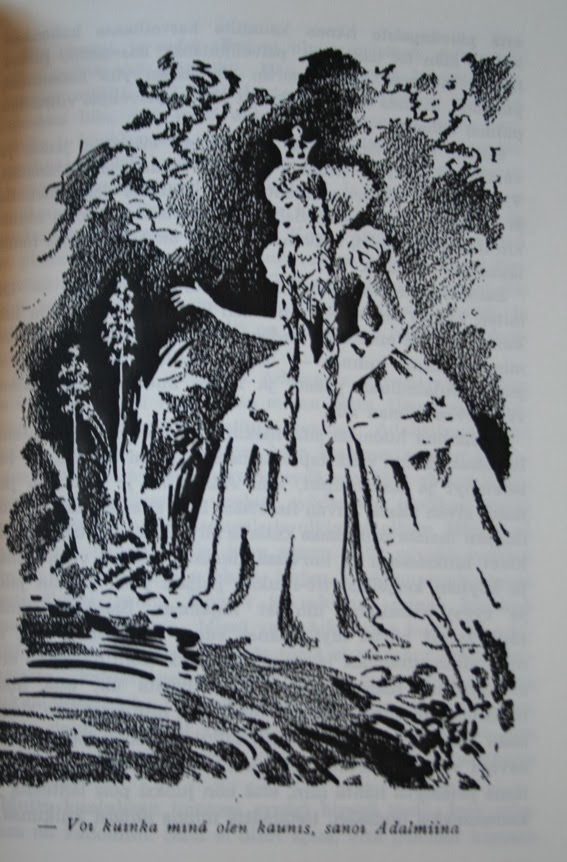
She found herself bored in the castle, likely because her life lacked any challenge, so she escaped into the forest. She leaned over a pool of water to admire her own reflection and was so obsessed with her own image that her crown fell into the water. The pearl was lost.
Instantly, she became a plain peasant girl in rags. She forgot who she was and wandered deep into the forest, where an old woman took pity on her and allowed her to stay in her cottage to look after her goats.
With her new kind heart, Adalmina was grateful and content with her new life. Meanwhile, her parents were desperate to find her, and promised her hand in marriage to anyone who brought her home.
After years of searching, a prince found her crown and got lost in the forest himself, where he met an old woman and an endearing goat girl. He couldn't understand why a plain girl moved his heart so much. He asked them if they had seen Adalmina, but they said no.
The king was overjoyed when the prince returned the crown, and invited every girl of the right age in the kingdom to try it on. The crown passed from head to head, but it fitted no one.
Just as the sun was setting, she arrived.

Happy to see her, the prince declared that regardless of whether Adalmina was found or not, he would marry this girl. The crown fitted, and she transformed back into Adalmina, with her beauty, intelligence and bank balance restored. But her heart remained kind. Remembering how badly she had treated people, she fell to her knees and begged their forgiveness, and they rejoiced. The prince and princess married and lived happily ever after.
Adalmina was always going to have a difficult time connecting to her true self. Not only was she born a princess, she was handed everything she could have hoped for on a plate. Beauty, intellect and riches inflated her sense of self and those around her didn't truly see her.
Aristotle and much of modern psychology would say that there’s no such thing as the highest form of confidence or self-esteem, as it sits between two vices. It’s measured against the truth of who you are and what you’ve done.
The word confidence comes from the Latin word confidentia, meaning "firmly trusting" or "bold," which traces back to the verb confidere ("to have full trust or reliance").
True confidence is an accurate, stable sense of yourself that you can rely on. We don't need to dress it up or make it look better than it is; in fact, we can do the opposite. We can place our trust in it, whilst we show up to focus on helping and connecting with others.
I therefore believe that we can draw a distinction between confidence, and arrogance and insecurity. The latter two are very much inward-facing. An insecure person walks into a room and thinks everyone is watching and judging them. An arrogant person walks into the same room believing they drip gold.
They both demonstrate a form of self-obsession.
A confident person walks into a room and notices the people in it. They trust that their reputation and worth can withstand whatever comes. It's outward-facing and curious.
Self-transcendence is the ability to rise above your own ego and personal interests, and connect with something greater than yourself. The deepest confidence comes from looking beyond yourself, not at yourself.
I must admit though, it's not always easy to tell when someone is being confident or cocky.
Words and quiz
The words
Values
This one is about worth: where it comes from, and what happens when we borrow it.
Humility
Seeing yourself accurately, neither bigger nor smaller than you are. For Aristotle, this was the healthy middle between insecurity and arrogance.
Kindness
Treating people well, whatever their status. Adalmina lost her beauty, wealth and intelligence, and gained the one gift that mattered: a loving heart.
Authenticity
Being who you are without the adornments. Take away Louis XIV’s robe, wig and sceptre, and Thackeray shows us a small, ordinary man.
Self-worth
Feeling okay as you are, not only when you’re admired or successful. Rembrandt lost almost everything, but not his sense of who he was.
Gratitude
Appreciating what you already have. Diogenes only wanted the sun on his face, and the goat girl was content with a simple life.
Honesty
Telling people the truth, and being willing to hear it. Without honest mirrors, our idea of ourselves drifts away from reality.
Writing task
Choose whatever speaks to you. You don’t have to answer everything, and there’s no word limit.
Confidence and arrogance
The story
Values
The quiz
A C1 challenge. Every answer has a near miss, so read each option carefully. Only your first answer counts towards your score, but afterwards you can click any of the other options to see what it means. Stuck? The words tab explains the idioms and words from the issue.